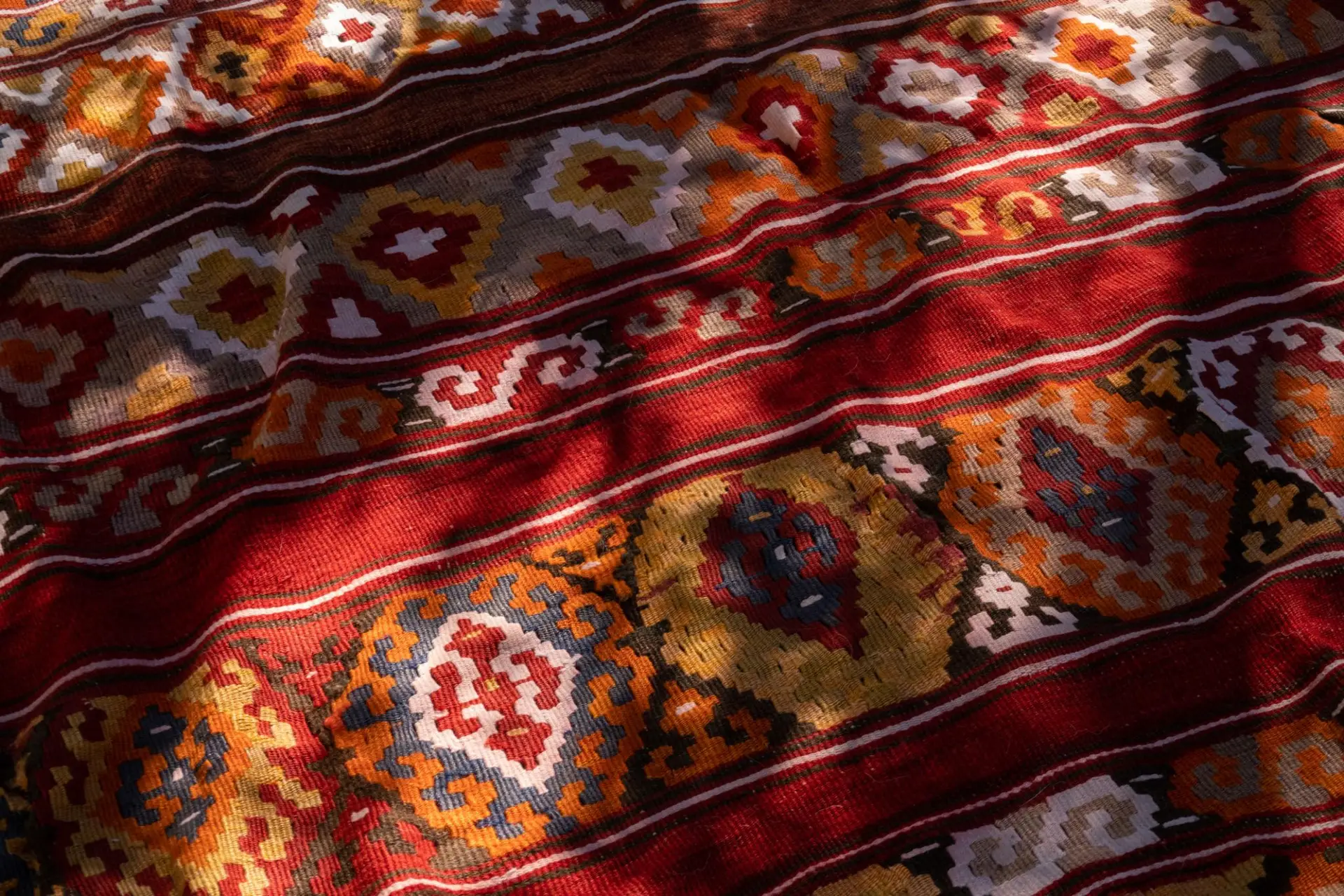
There is something strange about a rug.It is one of the most ordinary objects in a home. You walk across it without thinking. You place a table on it, sit on it, fold it, move it to another room. Yet in Anatolia, the carpet and kilim have also been used to carry ideas that cannot be touched: protection, fertility, attachment, memory, continuity, fear and hope.
This makes the Turkish rug an unusual cultural object. It belongs to the everyday world, but it can also contain traces of an invisible one.
When we look at an old Anatolian rug, we often try to decode it. What does this shape mean? What does that motif represent? But this approach can be misleading. Anatolian motifs were not a universal language with one fixed dictionary.
Their names, forms and associations changed between regions and generations.The more interesting question is not simply what does this motif mean?
It is why did someone feel the need to weave this idea into the fabric of everyday life?
When Belief Became Part of the Household
The spiritual dimension of Anatolian weaving begins with the role of the textile itself. Carpets and kilims were not originally made to become museum pieces.
They were used. They covered floors, created seating spaces, insulated tents and homes, formed part of household possessions and travelled with families.

For nomadic and semi-nomadic communities, textiles were particularly important because they were among the most portable elements of a household.
A tent could be dismantled, animals could move on and possessions could be packed, but woven textiles could continue to define a living space wherever the family went. This changes how we understand traditional Turkish rugs. A protective motif woven into a kilim was not necessarily an isolated religious statement. It existed alongside food, family, work and sleep. The spiritual and the practical occupied the same surface.
The Motif Was Never Just a Motif
One of the most fascinating things about Turkish rug motifs is that they resist simple translation. A symbol can have one association in a particular village and another somewhere else. A motif can change its appearance while retaining an older idea. A name can describe its physical shape rather than its symbolic meaning.
Take the pıtrak, a prickly plant whose form has been transformed into a geometric motif in Anatolian textiles. Its association with abundance and protection is particularly interesting when considered alongside the physical characteristics of the plant itself. It spreads, catches onto clothing and produces numerous seeds.

The motif therefore sits somewhere between observation and symbolism. The weaver sees something in nature, abstracts it and places it into another world.
This process happens repeatedly in Anatolian weaving. The natural world becomes geometry. A plant becomes a pattern. An animal becomes an angular form. An object from daily life becomes a symbol. The original image may eventually become almost unrecognisable, but the pattern survives.
Protection: Why We Woven What We Feared
Some of the most interesting Anatolian motifs emerge from an old human instinct: representing a danger in order to protect against it. The akrep, or scorpion, is a striking example. Its appearance in kilim design is sometimes interpreted in relation to protection from harmful creatures or forces. What is fascinating is the paradox.
A dangerous animal becomes a decorative pattern intended to keep danger away. The same logic can be found in other protective forms, including the çengel, or hook, and stylised animal forms such as the kurt ağzı, the wolf's mouth.

These motifs remind us that symbolism does not always work by representing something beautiful. Sometimes it represents precisely what one wishes to control. The pattern becomes a boundary.And this may explain why geometric motifs can feel surprisingly forceful.
Their sharp angles, hooks, teeth and repeated forms are not simply aesthetic choices. In some traditions, geometry could become a way of organising the unknown.
The Wolf, the Scorpion and the Ambiguity of Nature
Anatolian weaving rarely presents nature as simply good or bad. The same natural world that provides wool, food, water and shelter also contains predators, poisonous animals, drought and winter.
This complexity appears in Anatolian rug symbolism. The wolf is a particularly interesting example. In Turkic cultural history, the wolf carries a much deeper symbolic history than the simplified idea of “protection” often assigned to it. It can appear as a figure of strength, survival, ancestry and guidance.
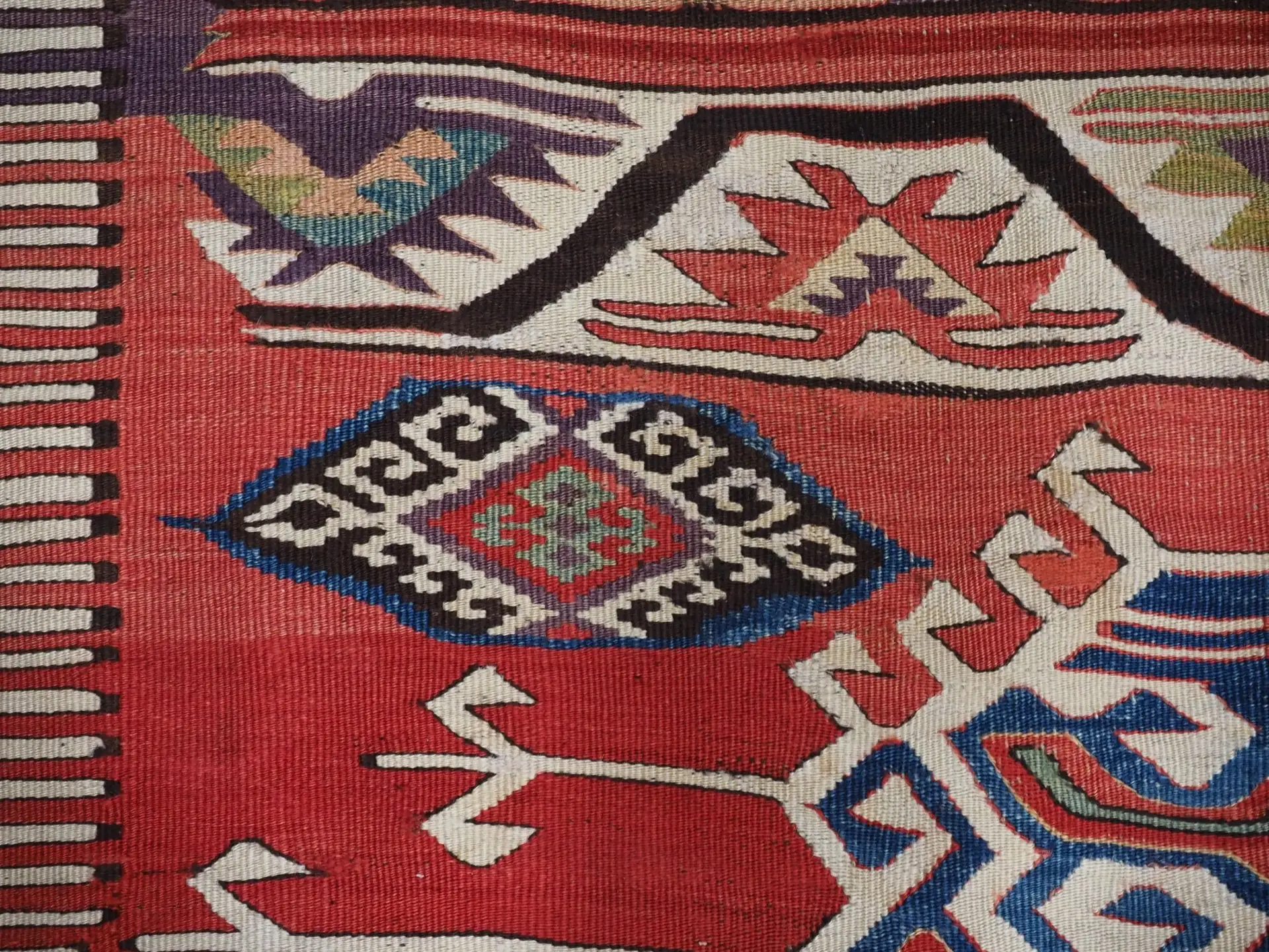
The scorpion, meanwhile, carries the opposite physical impression: danger that must be avoided.
Yet both can enter textile design. This suggests something important about traditional weaving. The motifs were not necessarily designed to create a peaceful picture of nature.
They were created by people who lived within nature.There is a difference.
Bukağı: The Desire to Keep Things Together
Some Anatolian motifs become particularly intriguing when their meanings are connected to relationships.
The bukağı, or fetter, takes its visual inspiration from something used to restrain an animal's movement.
In textile symbolism, it has been associated with ideas of attachment, union and keeping something together. It is an unexpectedly powerful image for marriage.
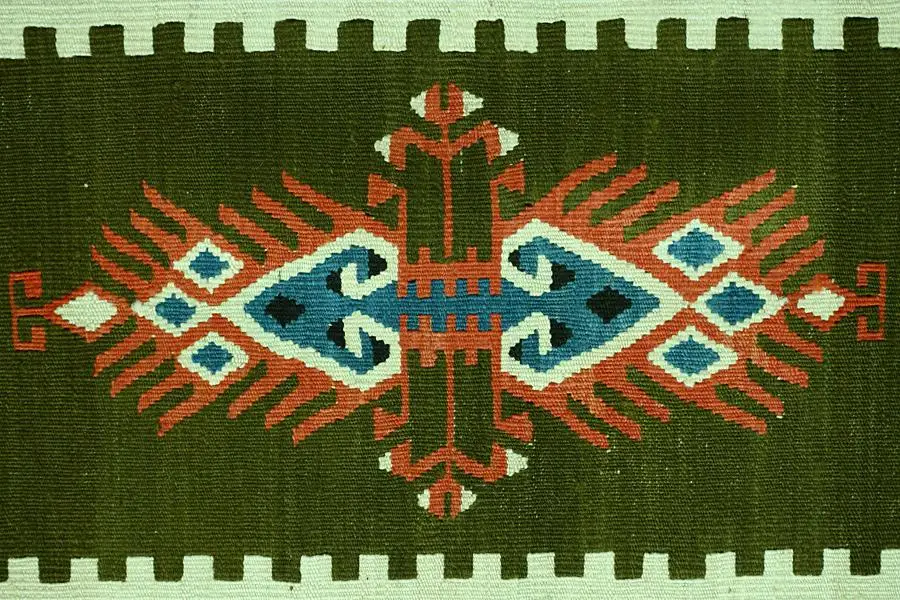
Instead of depicting two people in a romantic scene, the weaver uses an object of binding. This is where Turkish kilim motifs become culturally revealing. Their symbolism does not always correspond to the visual language we would choose today.
Marriage, family and belonging could be expressed through concepts such as attachment, continuity and binding. The motif becomes a glimpse into another social vocabulary.
Saç Bağı: When the Personal Becomes Symbolic
Another fascinating example is saç bağı, literally a hair tie. At first glance, it seems almost too ordinary to become a cultural symbol. Yet that is precisely what makes it interesting. Hair, particularly women's hair, carries associations of identity, femininity and social life across many cultures. A hair tie also performs a simple but significant action: it binds. In Anatolian textile traditions, motifs connected with binding, joining and continuity can therefore be read alongside marriage and family symbolism.
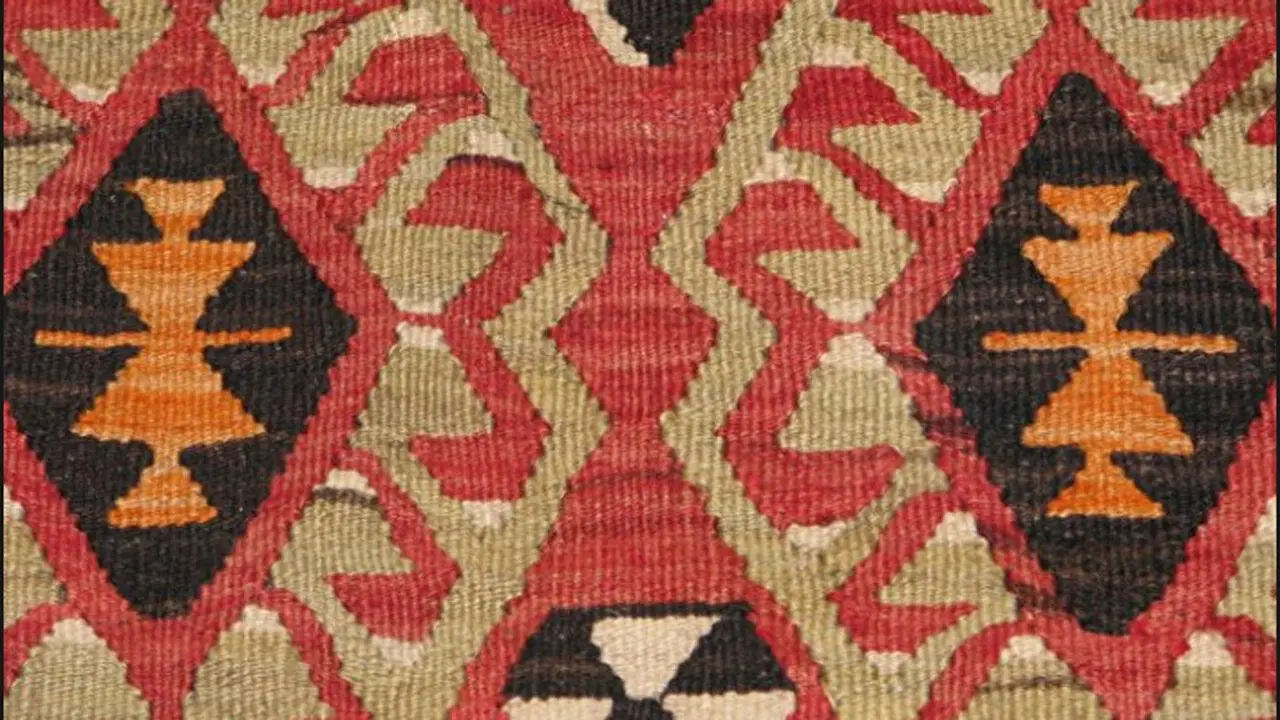
The important point is not to force one definitive interpretation onto every example.
It is to recognise the kind of thinking that allows an everyday object to become a visual metaphor. A small personal object becomes a pattern.
A pattern becomes inherited knowledge. Inherited knowledge becomes cultural memory.
The Spirituality Is Also in the Hands
Perhaps we spend too much time asking what the motifs mean and not enough time asking what it means to make them.
Hand weaving is repetitive. The loom demands attention. The hands repeat movements. The weaver follows a structure while making constant small adjustments.
This is a very different relationship with time from the one created by modern manufacturing.There is no instant result.

A pattern appears slowly. This makes weaving remarkably close to other forms of repetitive human practice that have historically been associated with contemplation: prayer beads, calligraphy, embroidery, chanting or repetitive handcraft.
We should be careful not to claim that every Anatolian weaver experienced weaving as a spiritual practice. But the structure of the activity creates space for concentration, memory and repetition. And perhaps that is enough. The spirituality of a handmade Turkish rug does not have to reside entirely in its motifs. It can reside in the time invested in making it.
Women, Memory and the Transmission of a Visual Language
For centuries, much of Anatolia's weaving knowledge was transmitted through women. Not through books. Through watching.
A girl could learn by sitting near an older woman at the loom.
She learned how wool behaved, how colours were combined, how patterns were remembered and how a particular motif was understood within her community. This is where the rug becomes more than an object.I t becomes a method of transmission.
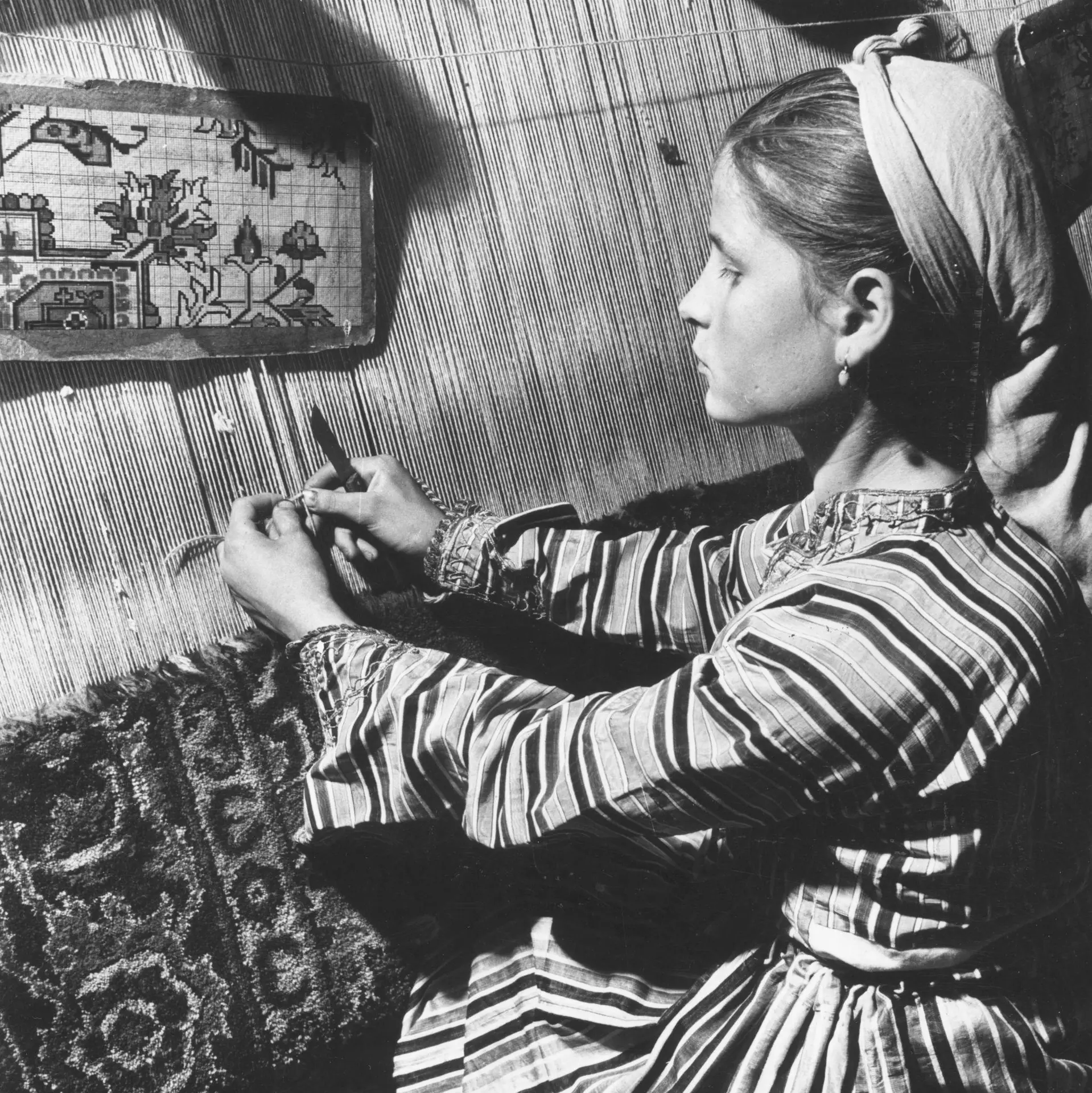
A grandmother's knowledge can become a granddaughter's hands. A pattern that existed before either of them was born can appear again in a new weaving.The design may change slightly.
The colours may change. The circumstances may change.But something survives. This is one of the quietest forms of spirituality found in Anatolian carpet traditions: the belief that something worth keeping should be carried forward.
What Happens When We Forget the Original Meaning?
Here is perhaps the most interesting question for a modern collector.
What happens when we inherit the pattern but lose the belief?
A person today might choose a Turkish kilim because of its unusual geometry, muted colours or ability to transform a room. They may know nothing about the motif's regional history.

Does the symbol still matter?
Perhaps differently. The original meaning may no longer be consciously understood, but the object itself has survived.
Someone has chosen to preserve it rather than discard it.
A piece of visual culture has crossed generations and entered another life. In that sense, collecting can become another form of transmission.
The meaning changes.The memory remains.