Why Have We Been Putting Flowers Under Our Feet for a Thousand Years?
Some gardens bloom for a season. Others bloom for centuries.
Across Anatolia, flowers found a second life not only in meadows and palace gardens, but in textiles. They emerged from dyed wool in nomadic Turkish kilims and glowed in fine silk Turkish rugs woven for Ottoman courts. Whether crafted by a village weaver or an imperial workshop, floral motifs carried the same idea: bringing a piece of nature indoors.
Long before “bringing the outdoors in” became an interior design trend, people instinctively surrounded themselves with nature. They carved flowers into stone, painted them onto ceramics, embroidered them into garments, and wove them into Turkish carpets that would outlive generations. Every bloom carried a story. Every vine carried a wish. Every petal reflected humanity’s enduring fascination with the natural world.
But why have flowers remained one of the most beloved motifs in Turkish rugs and kilims for nearly a thousand years?
The answer begins long before the Ottoman Empire.
Floral Motifs in Turkish Rugs and Kilims: Nature Was the First Designer
Long before palace workshops and imperial commissions, the people of Anatolia looked to the landscapes around them for inspiration.

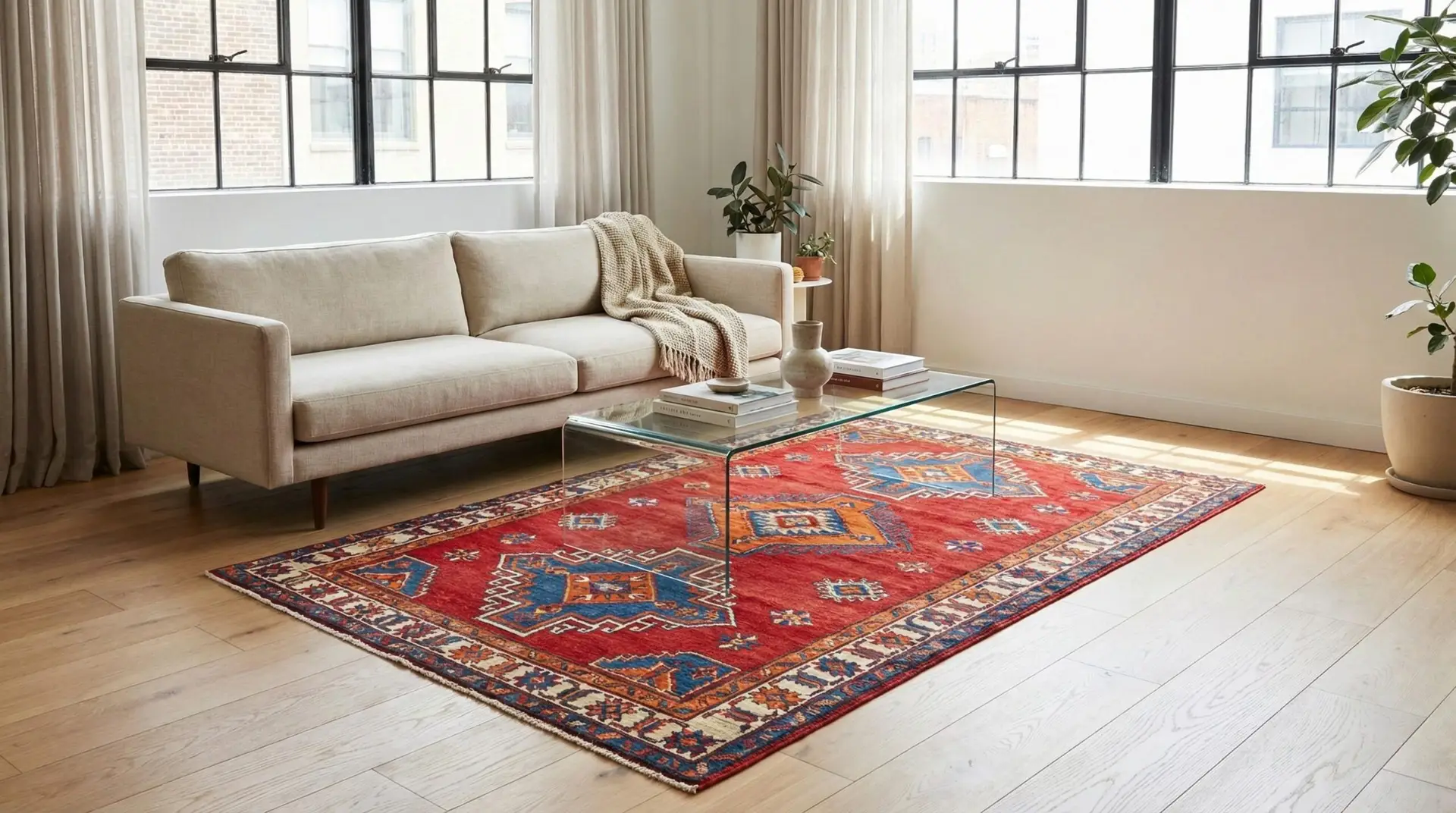
The earliest Anatolian rugs and Turkish kilims, many woven during the Seljuk period and by nomadic Turkic tribes, rarely featured flowers as realistic botanical illustrations. Instead, blossoms were transformed into geometric symbols that could be woven from memory. A flower might appear as a diamond, a hooked star, or a stylized rosette. These abstract forms were not limitations of technique but a distinctive artistic language.
For communities whose lives followed the rhythm of nature, flowers symbolized far more than beauty. The arrival of spring meant survival after a harsh winter. Wildflowers marked fertile grazing lands. Blossoming fruit trees promised another successful harvest. Nature shaped everyday life, and naturally, it shaped weaving traditions as well.
Unlike paintings hanging on walls, Turkish rugs became part of daily living. They covered floors, wrapped belongings during migration, decorated tents, and marked important family occasions. By weaving flowers into textiles, Anatolian artisans carried fragments of the landscape wherever life took them.
These early floral motifs laid the foundation for one of the richest decorative traditions in the world.
From Anatolian Kilims to Ottoman Silk Rugs: When Flowers Became Art
As the Ottoman Empire expanded, so did its artistic ambitions.
Imperial gardens became masterpieces in themselves, filled with carefully cultivated tulips, roses, carnations, hyacinths, and cypress trees. Court artists documented these gardens with extraordinary precision, creating a visual language that influenced ceramics, manuscripts, architecture, textiles, and eventually some of history’s finest Turkish carpets.

At the same time, the materials themselves evolved.
Across Anatolian villages, Turkish kilims continued to be woven primarily from hand-spun wool. Wool’s strength, warmth, and natural texture suited everyday life, while its slightly matte appearance gave floral motifs a grounded, organic quality.
Within the Ottoman court, however, silk transformed what was possible.
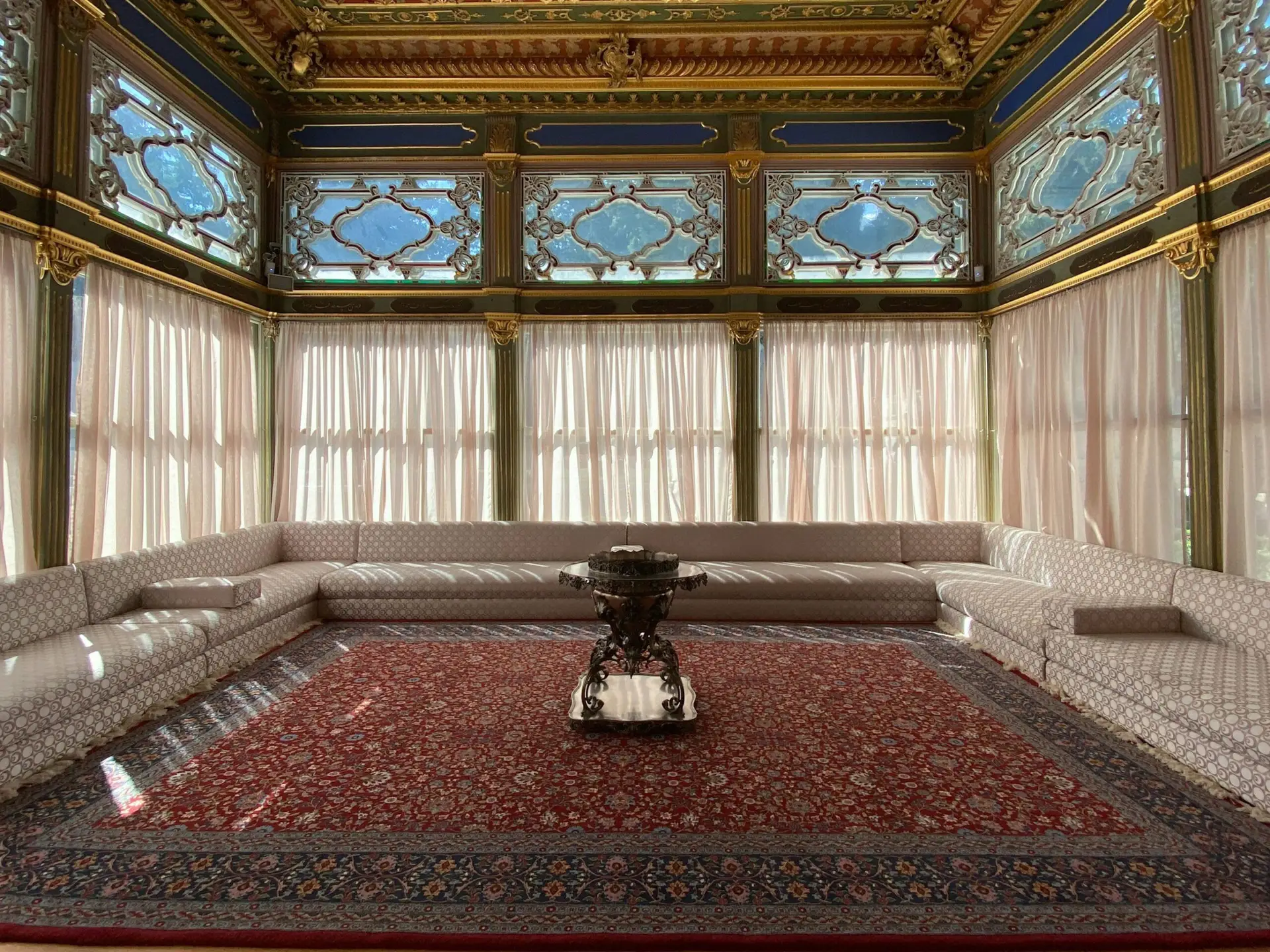
Fine silk Turkish rugs, particularly those woven in renowned weaving centers such as Hereke during the nineteenth century, could achieve remarkably high knot densities. This allowed artisans to create delicate petals, flowing stems, intricate leaves, and subtle color transitions that seemed almost painted rather than woven. As light moved across the silk fibers, flowers shimmered with extraordinary depth and elegance.
The same tulip could tell two entirely different stories.

In a wool village rug, it felt rooted in Anatolia’s rolling hills.
In a silk Ottoman carpet, it became part of an imperial garden.
Neither was more beautiful than the other. Each reflected a different chapter of Turkish weaving history.
The Meaning of Flowers in Turkish Carpets
Flowers in Turkish rugs were never chosen at random. While meanings often varied from region to region, many blossoms developed powerful symbolic associations that continue to fascinate collectors today.

The Tulip
If one flower defines Ottoman aesthetics, it is undoubtedly the tulip.
Its elegant silhouette became a symbol of refinement, perfection, and divine beauty. During the famous Tulip Era, the flower appeared almost everywhere, from palace gardens to Iznik ceramics and luxurious Ottoman carpets. Some historians also note that the Ottoman Turkish spelling of lale shares the same Arabic letters as the word for God, giving the flower an additional spiritual resonance.

The Rose
The rose spoke a more emotional language.
It represented love, devotion, grace, and paradise. In many artistic traditions throughout Anatolia, the rose reminded viewers that beauty is both precious and fleeting. Woven into a Turkish carpet, it became a lasting reminder of emotions that outlive a single lifetime.
The Carnation
The carnation was admired for its layered petals and remarkable resilience.
Ottoman artists often associated it with affection, happiness, health, and prosperity. Repeated along borders, carnations quietly expressed wishes for harmony within the household.
Hyacinths, Vines and Leaves
Hyacinths celebrated renewal and the arrival of spring.
Flowing vines symbolized abundance, continuity, and the enduring strength of family.
Leaves represented growth, transformation, and life’s endless cycles.
Together, these motifs transformed Turkish rugs and kilims into visual stories rather than simple decorative objects.
Why Humans Naturally Choose Floral Designs in Home Décor
Walk into almost any culture throughout history and you’ll find flowers somewhere inside the home.

On painted ceilings.
On porcelain.
On fabrics.
On carpets.
This isn’t a coincidence.
Modern research into biophilic design suggests that humans naturally feel calmer and happier when surrounded by elements that remind them of nature. Organic curves, leaves, blossoms, and flowing branches reduce visual stress because our brains evolved within natural landscapes long before cities existed.
Centuries before psychologists explained our connection to nature, Anatolian weavers had already woven the answer.
A floral Turkish rug quietly transforms a room. Even in homes filled with concrete, glass, and steel, botanical motifs soften the atmosphere. They introduce movement where architecture is rigid and warmth where materials feel cold.
Perhaps this is why floral rugs never truly go out of fashion.
They satisfy something deeply human.
Why Floral Turkish Rugs Still Feel Timeless Today
Every floral Turkish rug carries two landscapes.
One is the room where it lives today.
The other is the landscape where its flowers first bloomed centuries ago.
Whether woven by a nomadic family crossing Anatolia, crafted in a village workshop, or meticulously knotted in silk for an Ottoman palace, each carpet preserves a conversation between people and nature. It reminds us that beauty was never considered unnecessary. It was essential.

This timeless relationship explains why floral Turkish carpets continue to complement both historic homes and contemporary interiors. Their blossoms are not tied to trends. They belong to something much older: humanity’s instinct to celebrate the natural world.
The next time you pause before a floral Turkish kilim or an elegant silk Turkish rug, look beyond the pattern.
Imagine the wildflowers that inspired it.
Imagine the hands that transformed them into knots.
Imagine a garden that refused to disappear with the changing seasons.
Because in the end, a Turkish rug does not simply preserve flowers.
It preserves our relationship with nature.