
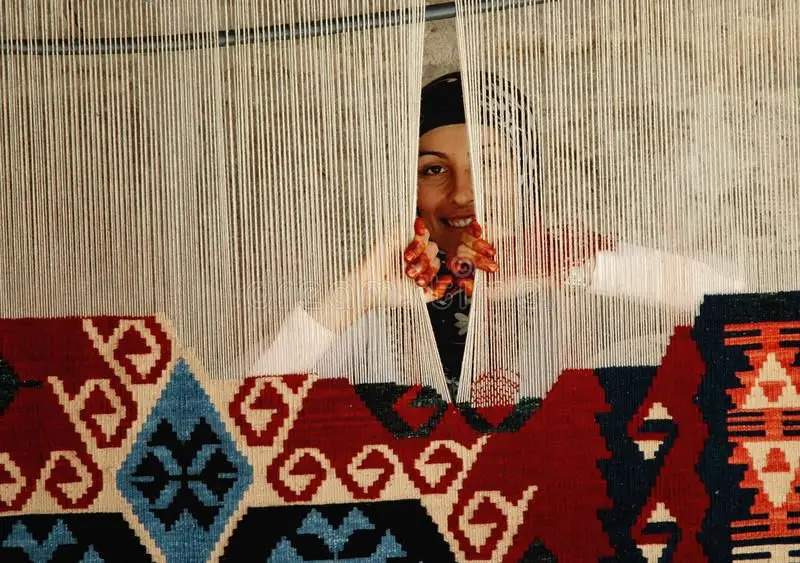
In a quiet Anatolian home, the loom stands like a witness. Threads stretch tightly across its frame, waiting to be transformed not just into a Turkish rug, but into something far more intimate. Here, weaving is not a task. It is a language.
Every knot carries intention, every color holds memory, and every finished piece becomes part of a life story that unfolds over decades.
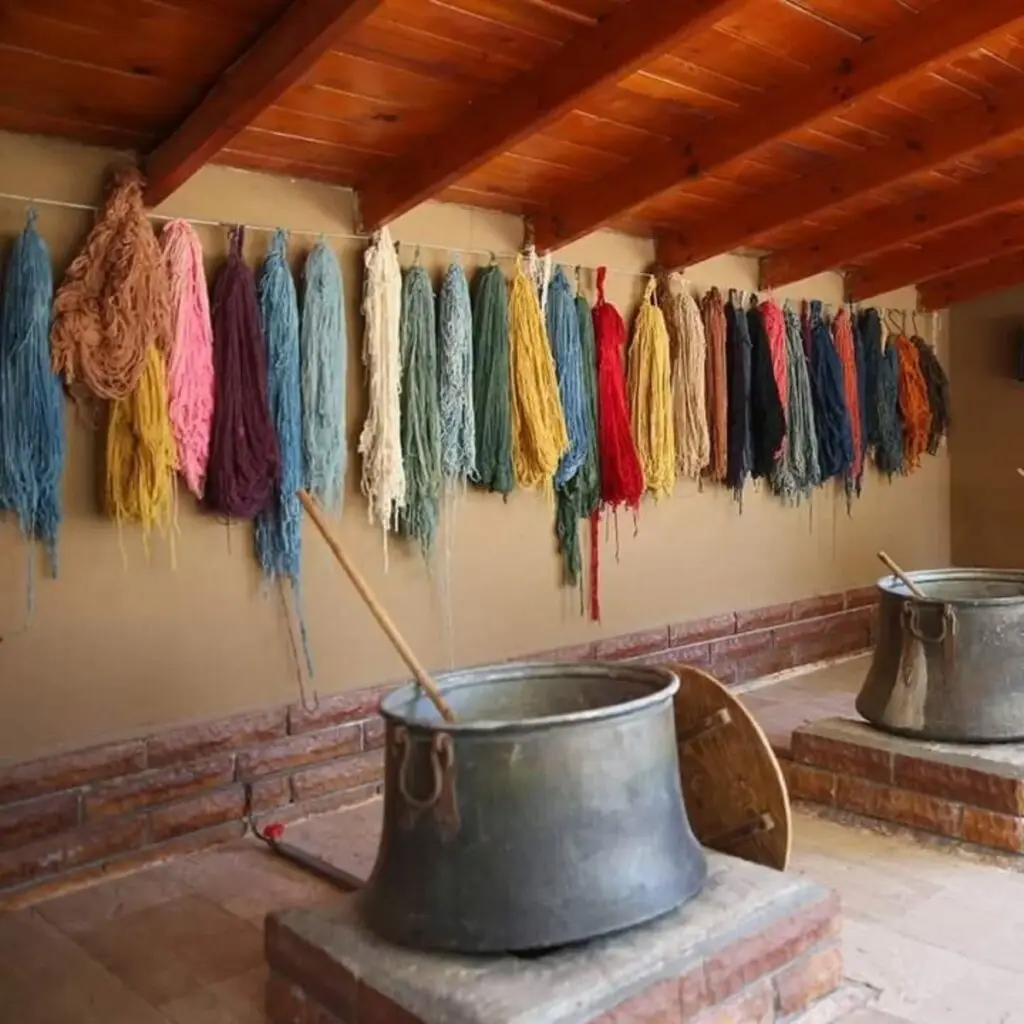
Long before Turkish rugs entered galleries or adorned curated interiors, they marked beginnings. They welcomed newborns, guarded against unseen forces, softened the first steps of childhood, and traveled, folded carefully, into new homes at marriage. Whether a finely knotted Turkish carpet or a flatwoven kilim, these textiles were never passive objects. They lived alongside people, absorbing rituals, emotions, and transitions.
To understand a Turkish kilim rug or even a modest small Turkish rug is to look beyond pattern and craftsmanship and into a world where objects are woven with purpose. In these traditions, a rug is not simply placed on the floor. It is placed within a life.
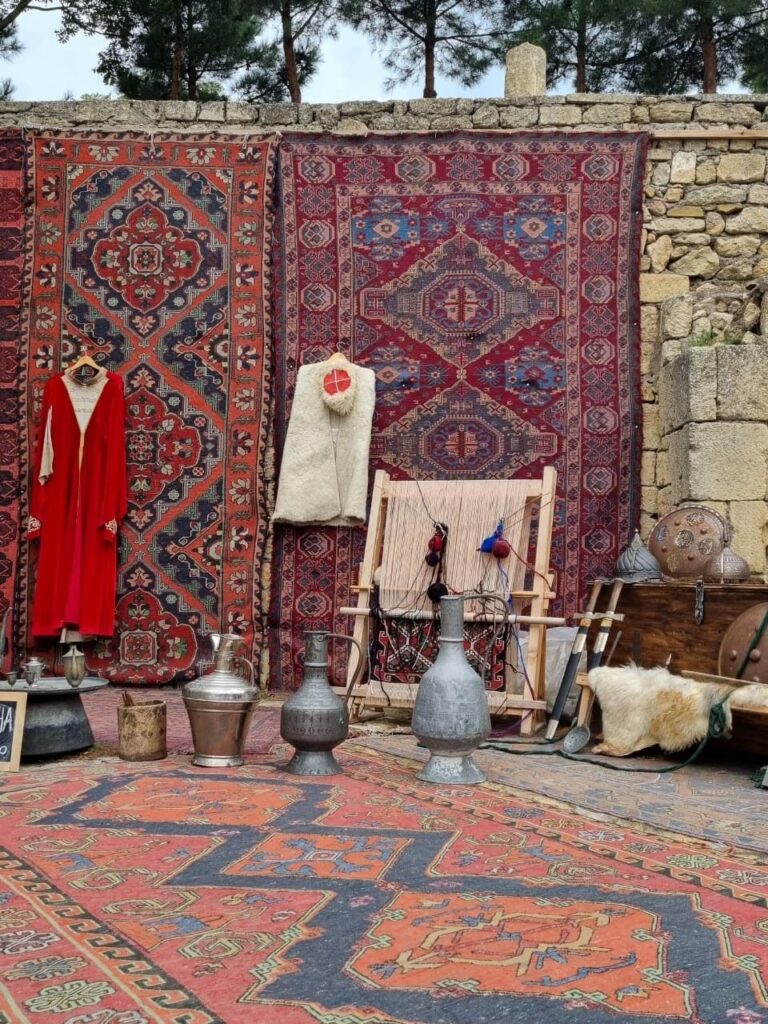
The Turkish Rug as a
Living Archive of Ritual
A Turkish rug is often approached as an object of beauty or craftsmanship, yet within its structure lies something far more complex. It functions as a narrative device, a surface where personal stories and collective traditions are recorded knot by knot. Long before written records reached rural Anatolia, motifs carried meaning across generations. A rug did not simply decorate a space. It spoke, remembered, and signaled belonging.
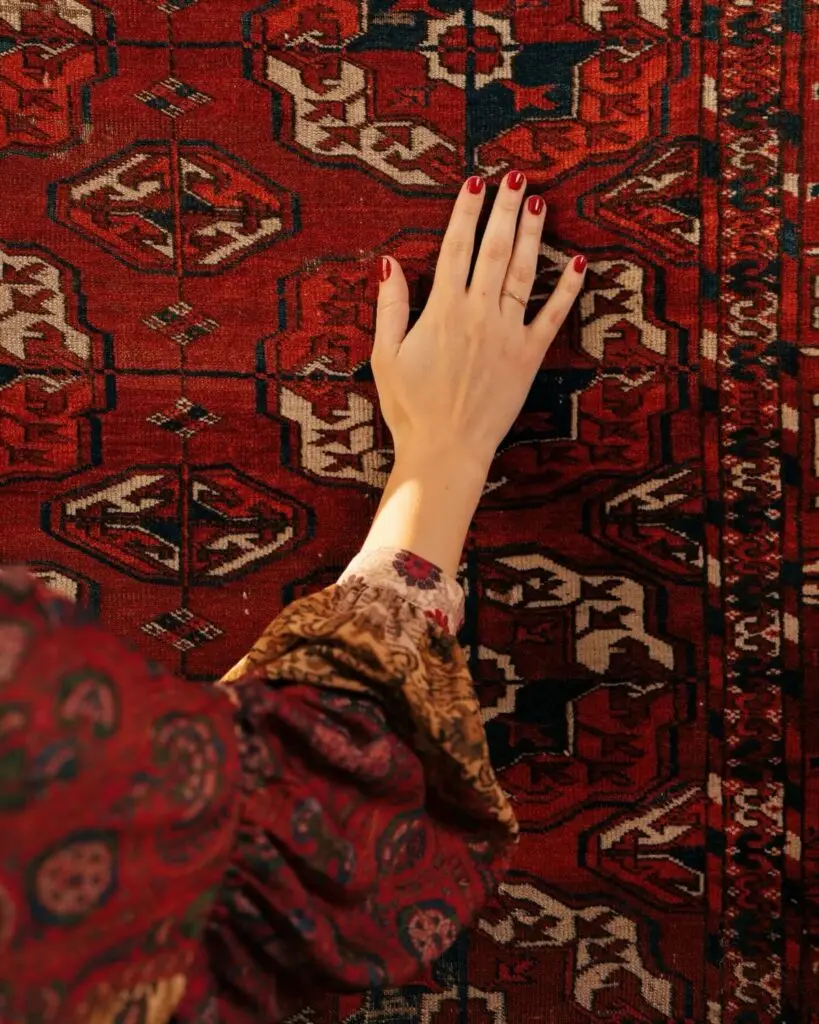
In both Turkish rugs and kilims, patterns operate as a visual language. Motifs are not arbitrary ornaments but symbols with intention.
The “hands-on-hips” figure, for instance, expresses fertility and the desire for continuity. The ram’s horn suggests strength and masculinity, while protective elements such as stylized eyes or amulets are woven in to guard against harm. These symbols often appear repeatedly, forming a rhythm across the surface that communicates hopes, fears, and life stages without a single written word.
A Turkish carpet becomes, in this sense, a coded document of human experience.
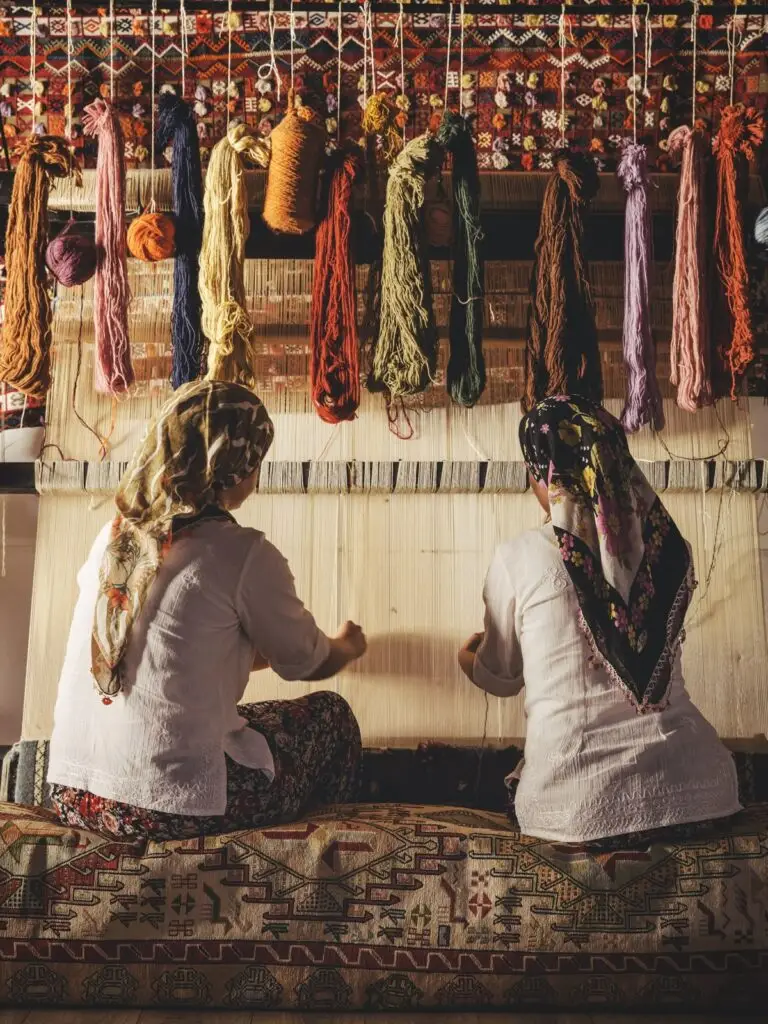
What makes this language even richer is its regional variation. Across Anatolia, different communities developed distinct interpretations of shared symbols.
A motif woven in Central Anatolia may carry the same core meaning as one from the Aegean or Eastern regions, yet its form, scale, or color palette shifts subtly. These differences reflect local materials, environments, and cultural nuances.
Without becoming overly technical, it is enough to recognize that no two regions speak this visual language in exactly the same way.
Each Turkish rug holds both a universal vocabulary and a local accent, making every piece a unique archive of ritual and identity.
Symbols Woven into
Turkish Carpet Traditions
Within every Turkish carpet, motifs form a deliberate visual language. These symbols are not decorative fillers but carriers of meaning, understood across generations.
Hands-on-Hips

A symbol of fertility and femininity, expressed through a stylized figure. Found in both pile rugs and kilims, it reflects continuity and the desire for family.
Ram’s Horn
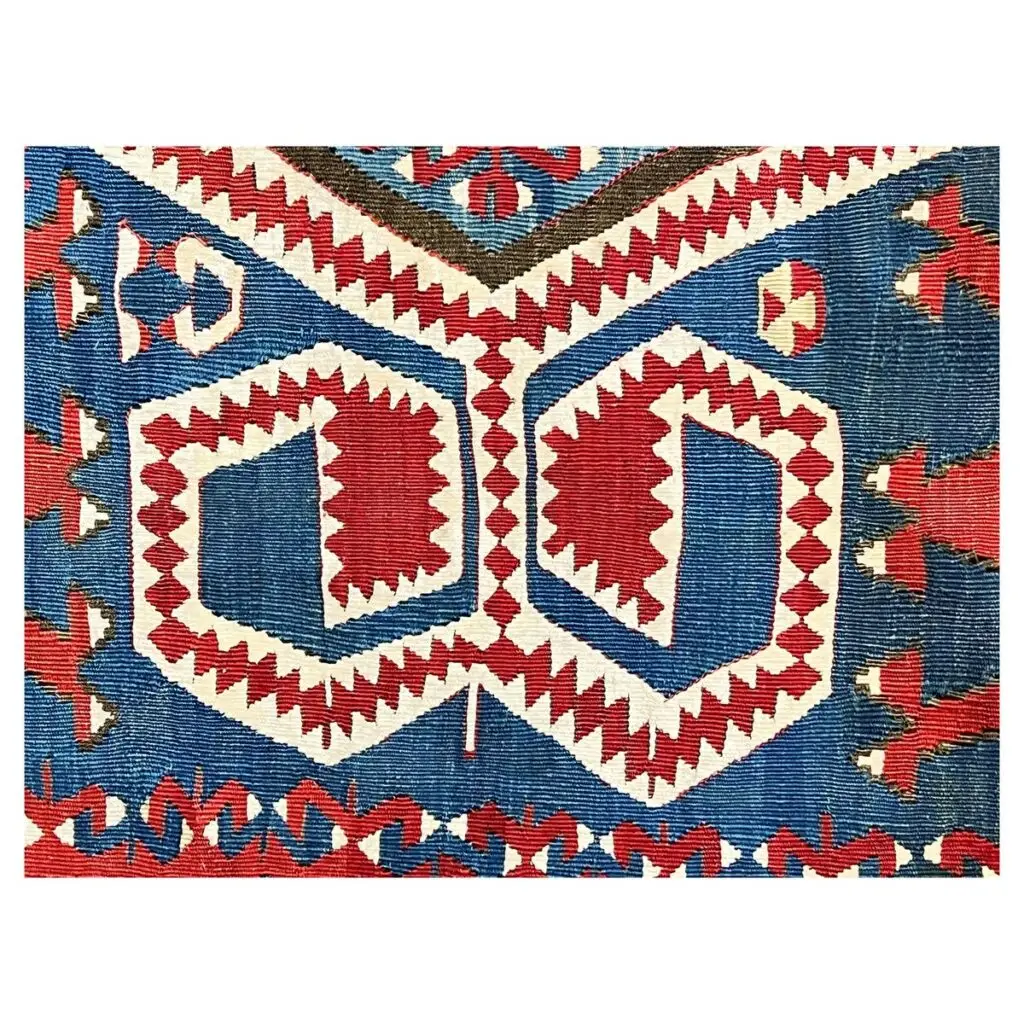
Representing strength and masculinity, this motif appears in bold, angular forms. In a Turkish carpet, it often feels structured, while in kilims it becomes more linear.
Evil Eye
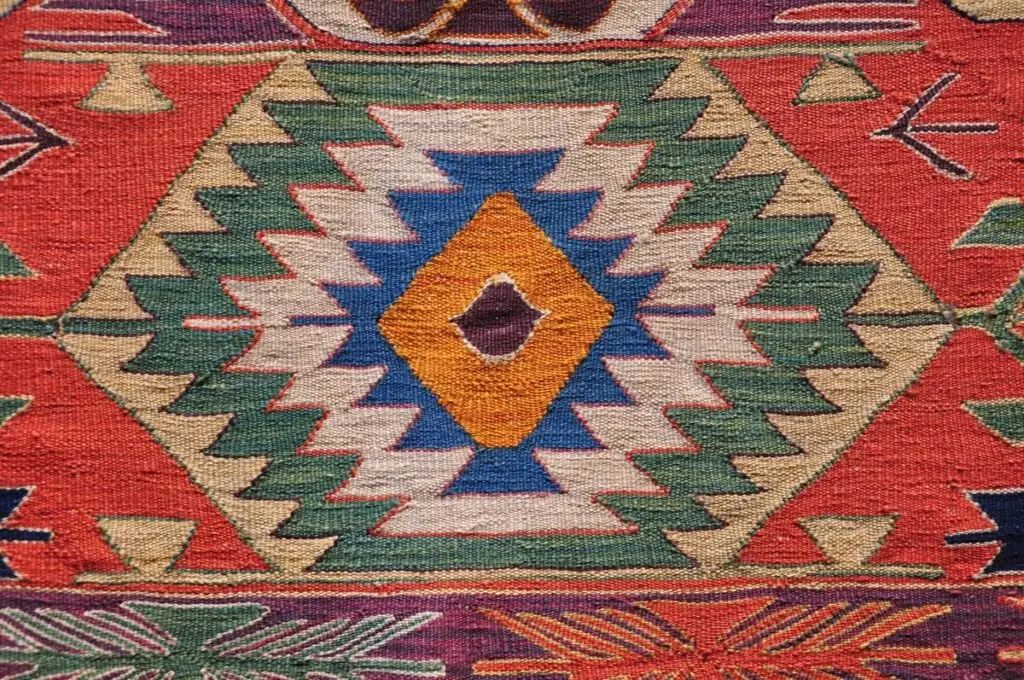
A protective symbol woven into borders or central fields to guard against harm. Its form shifts between dense knots and flatweave lines, but its purpose remains constant.
Birth and Protection: The First Small Turkish Rug
In many Anatolian traditions, the arrival of a child is marked not only by celebration but by quiet acts of protection. Textiles play a role from the very beginning.
A small Turkish rug or kilim may be prepared or gifted for a newborn, placed beneath a cradle or used within the home as a symbolic safeguard. These early pieces are not chosen at random. They are selected or woven with intention.
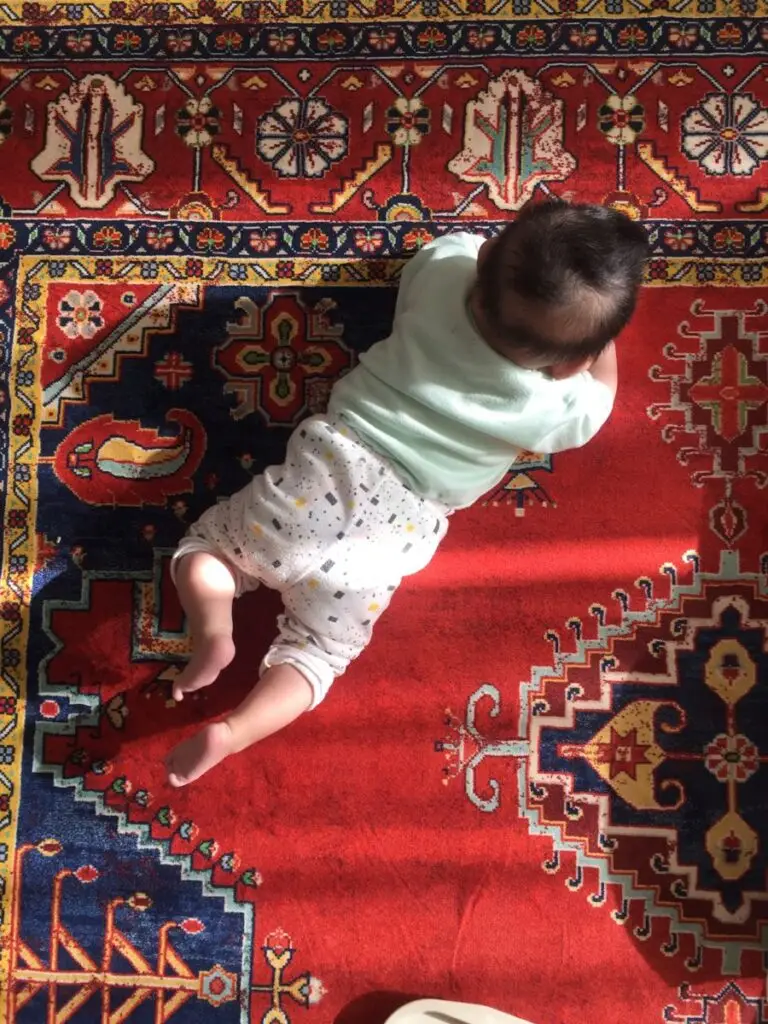
Within both Turkish rugs and kilims, protective elements are embedded into the design. Amulet-like motifs, enclosed borders, and repeating patterns create a visual sense of containment and security. The idea is not decorative but preventative.
To surround the child with symbols that guard, deflect, and preserve. In this context, a Turkish kilim rug becomes part of early life, present in moments that are both intimate and vulnerable.
Red Turkish Rug Motifs and Protective Meanings
Color carries its own language, and red holds a central place within it. A red Turkish rug is often associated with life, vitality, and protection. Its intensity is not accidental.
Red signals presence. It is believed to repel negativity while affirming strength and continuity, making it especially meaningful in the context of birth.

This is why red frequently appears in textiles connected to beginnings. Whether in borders, fields, or accent motifs, it frames the space with energy and intention. ,
Beyond aesthetics, the color operates as an emotional and symbolic anchor. In early life, as in many stages that follow, a red Turkish rug does more than occupy space. It defines it, protects it, and gives it meaning.
Love, Dowries, and the Turkish Carpet
As life moves toward adulthood, textiles take on a new role, shifting from protection to expression. In many Anatolian communities, the preparation for marriage included the creation of a dowry, where weaving held a central place. A young woman would spend years producing pieces for her future home, with each Turkish carpet reflecting not only skill but intention.
These works were not made under urgency but over time, allowing patterns, colors, and compositions to evolve alongside the weaver herself.
Within Turkish rugs, this process becomes deeply personal. A rug could carry quiet signals about readiness, patience, and expectation. It was both preparation and statement, shaped by hand and shaped by life.
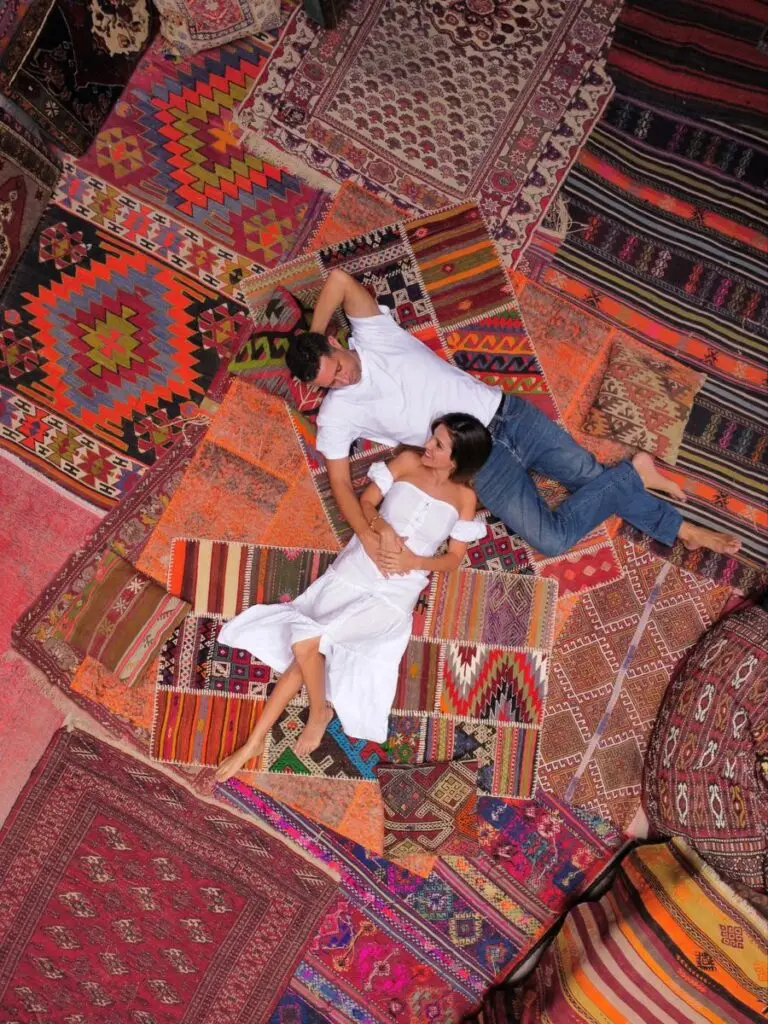
Beyond utility, these textiles carried emotional weight. They held hopes for stability, partnership, and continuity. In this sense, a Turkish carpet within a dowry was never just an object to furnish a home. It was a reflection of identity, a tangible expression of what the maker brought into a new chapter of life.
The Language of Love in Turkish Rugs
Within Turkish rugs, motifs often shift toward themes of connection and continuity.
Patterns associated with union, devotion, and fertility appear with greater intention, forming a visual language centered on partnership. These symbols do not declare meaning openly, but they are precise in what they convey.
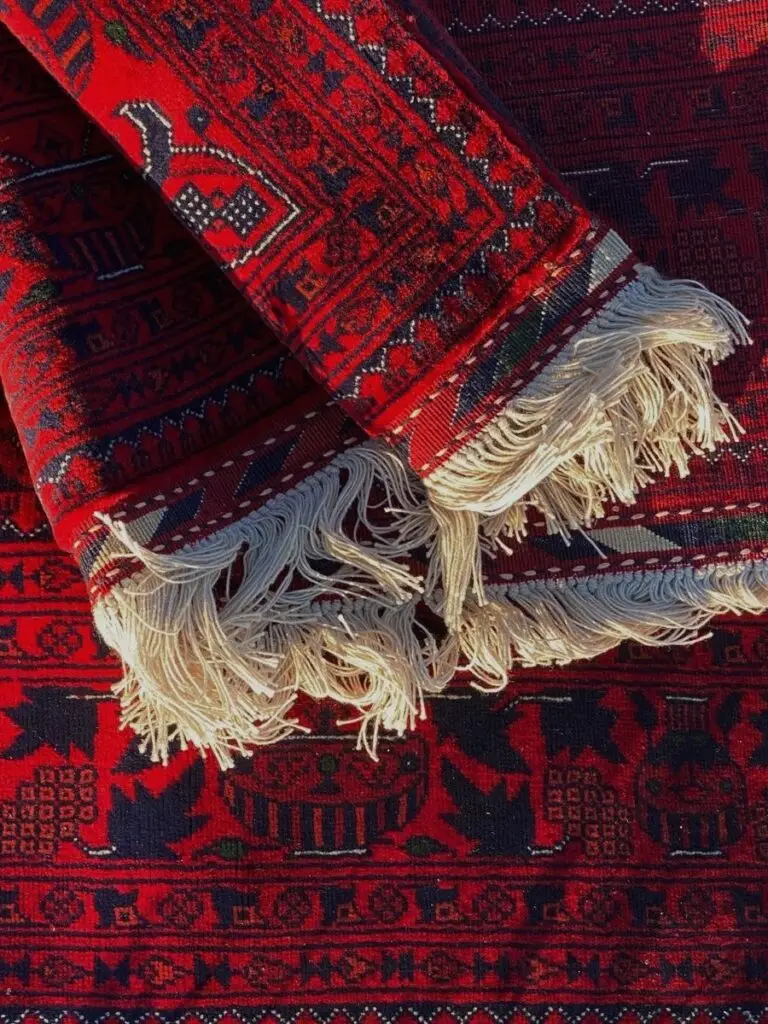
Each rug functions as a personal message. Subtle variations in pattern, spacing, or color can reflect individual choices, making no two pieces identical in meaning.
Unlike mass-produced textiles, Turkish rugs carry the imprint of the person who made them. They speak quietly, but with clarity, about commitment, hope, and the life that is meant to follow.
From Ceremony to Home – The Ritual Life of Turkish Rugs
After ceremonies end, the life of a rug continues. Pieces that once marked a wedding or formed part of a dowry move into daily use, settling into the rhythms of a home.
A Turkish rug shifts from symbol to surface, yet it never loses the meaning it carried at the beginning. It becomes part of ordinary moments, quietly present through years of living.
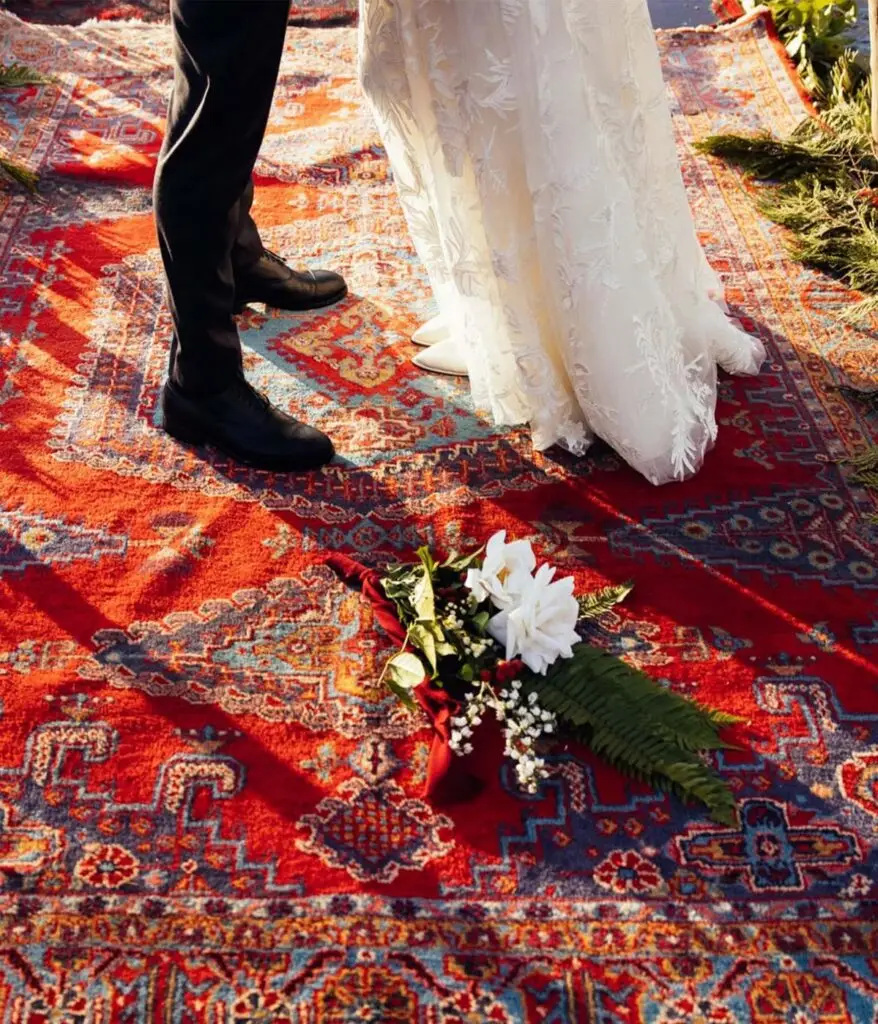
Over time, these rugs gather new layers of significance. A wedding rug may witness the growth of a family, the passing of seasons, and the changes within a household.
In many cases, Turkish rugs are preserved and passed down, not for their material value alone but for what they represent. They carry memory forward, linking one generation to the next through something tangible and enduring.
Every Turkish Rug Tells a Personal Story
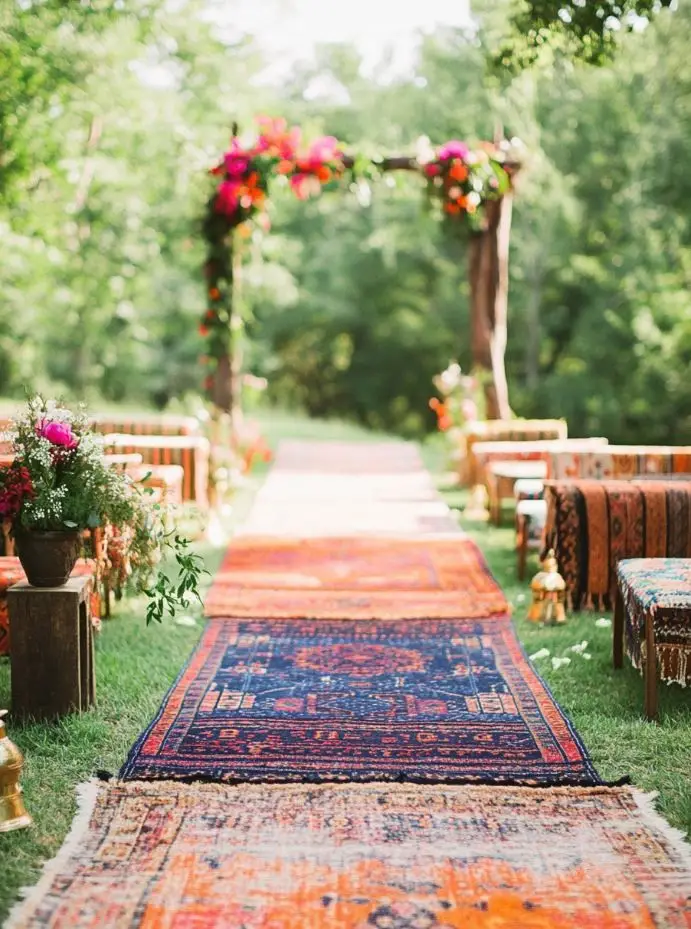
No two Turkish rugs are truly identical. Even when patterns follow a shared tradition, the hand of the weaver introduces variation. Small decisions in color, spacing, and execution create subtle differences that give each piece its own identity. Craftsmanship here is not about perfection but about presence.
This stands in clear contrast to industrial production, where uniformity defines value. A machine can replicate a pattern, but it cannot reproduce intention.
A Turkish rug holds traces of time, labor, and individual expression, making it less an object of repetition and more a record of human effort.

