What Is the Pazyryk Carpet? The World’s Oldest Carpet Explained
When people search for the oldest carpet in the world, they often expect to find an ancient relic—something admired for its age but disconnected from modern life. The Pazyryk carpet tells a different story. More than 2,300 years after it was woven, it still offers valuable insights into the craftsmanship, symbolism, and enduring appeal of Turkish rugs.
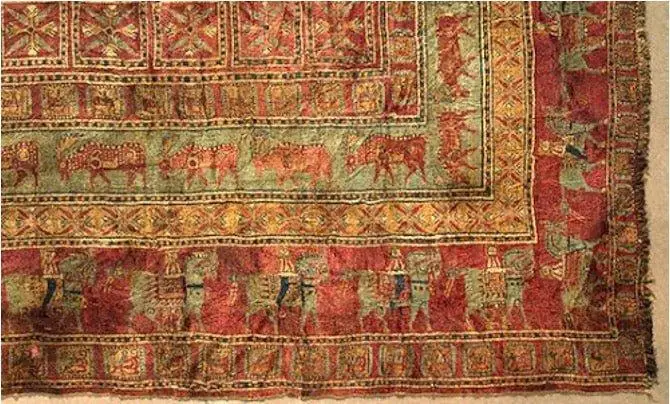
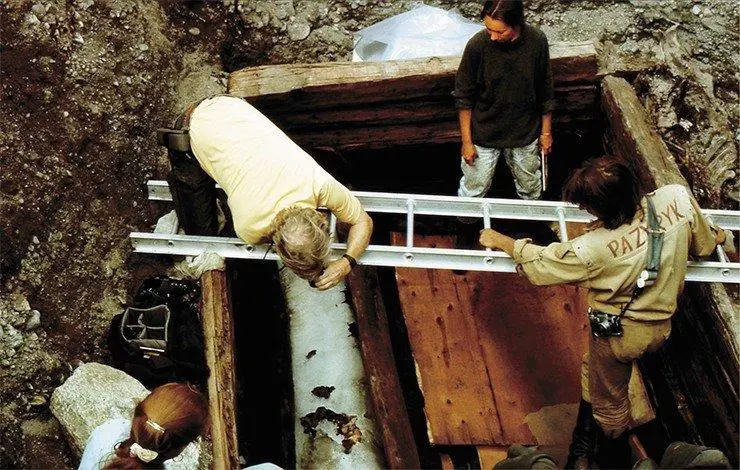
Discovered in 1949 by archaeologist Sergei Rudenko inside a frozen burial mound in the Altai Mountains of Siberia, the Pazyryk carpet owes its extraordinary condition to an unlikely accident. Water seeped into the tomb, froze, and remained trapped beneath layers of permafrost for centuries, preserving organic materials that would normally have decayed. Today, the carpet is housed in the State Hermitage Museum in St. Petersburg, where it continues to fascinate historians, designers, and rug collectors alike.
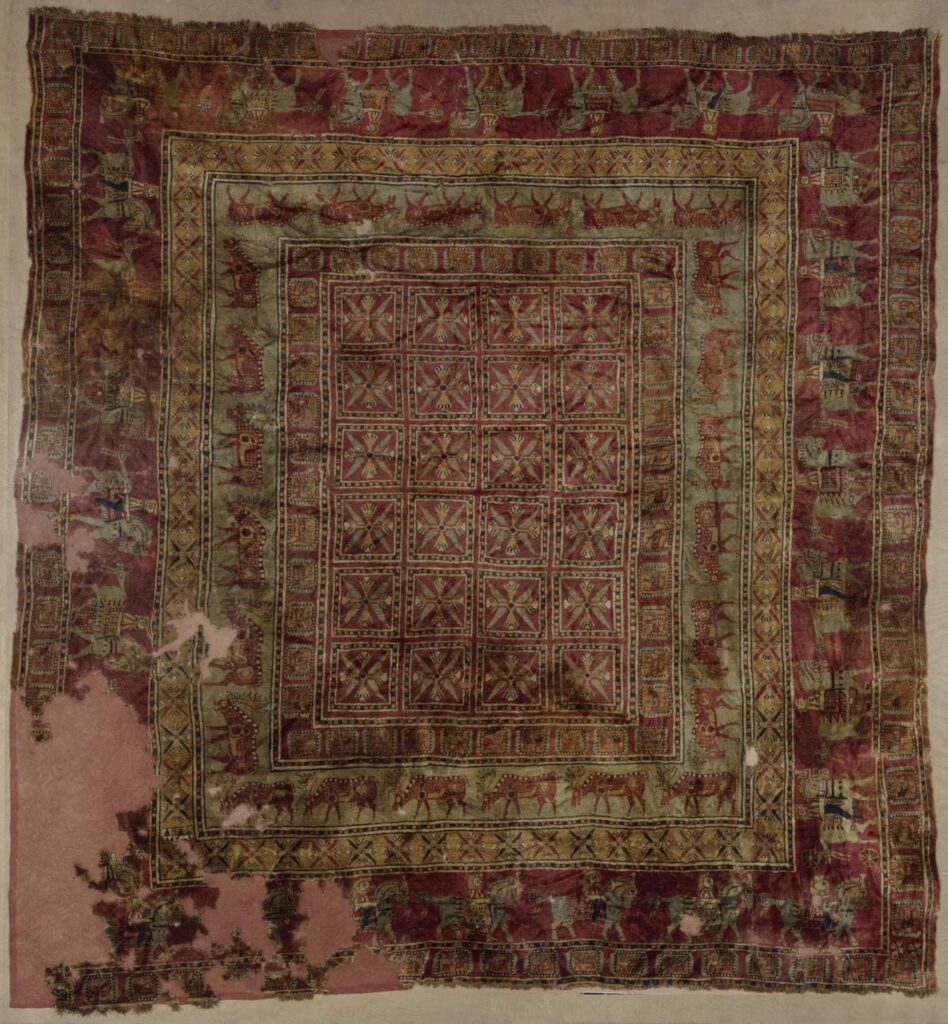
What makes the Pazyryk carpet remarkable is not simply its age. Dating to the 5th century BCE, it reveals a level of technical sophistication that rivals many of the finest handmade Turkish rugs produced today. Woven with approximately 360,000 symmetrical knots per square meter, it demonstrates remarkable precision, careful planning, and an advanced understanding of textile design. This was not the beginning of carpet weaving—it was evidence that the craft had already reached an astonishing level of refinement.
Its discovery also changed the way scholars viewed the history of Turkish carpets and other ancient weaving traditions. Instead of seeing carpets as simple household necessities, historians began to recognize them as sophisticated works of art, shaped by generations of skilled artisans and centuries of cultural exchange.
The Pazyryk carpet may be the world’s oldest surviving carpet, but its greatest legacy lies elsewhere: it reminds us that true craftsmanship is timeless. And perhaps nowhere is that legacy more evident than in the tradition of Turkish rugs, where many of the same techniques and design principles continue to be practiced today.
Was the Pazyryk Carpet a Turkish Rug? What Historians Say
One of the most frequently asked questions about the Pazyryk carpet is also one of the most debated: Was it a Turkish rug?
The short answer is that we don’t know—and that uncertainty is exactly what makes the carpet so fascinating.
Dating to the 5th century BCE, the Pazyryk carpet was woven long before the rise of the Seljuk or Ottoman empires. Trying to assign it to a modern nation or ethnicity would ignore the complex reality of the ancient world, where cultures, artisans, and ideas moved freely across vast regions. For that reason, most historians avoid making definitive claims about its origin.
Instead, they focus on what the carpet can actually tell us.
A Carpet at the Crossroads of Civilizations
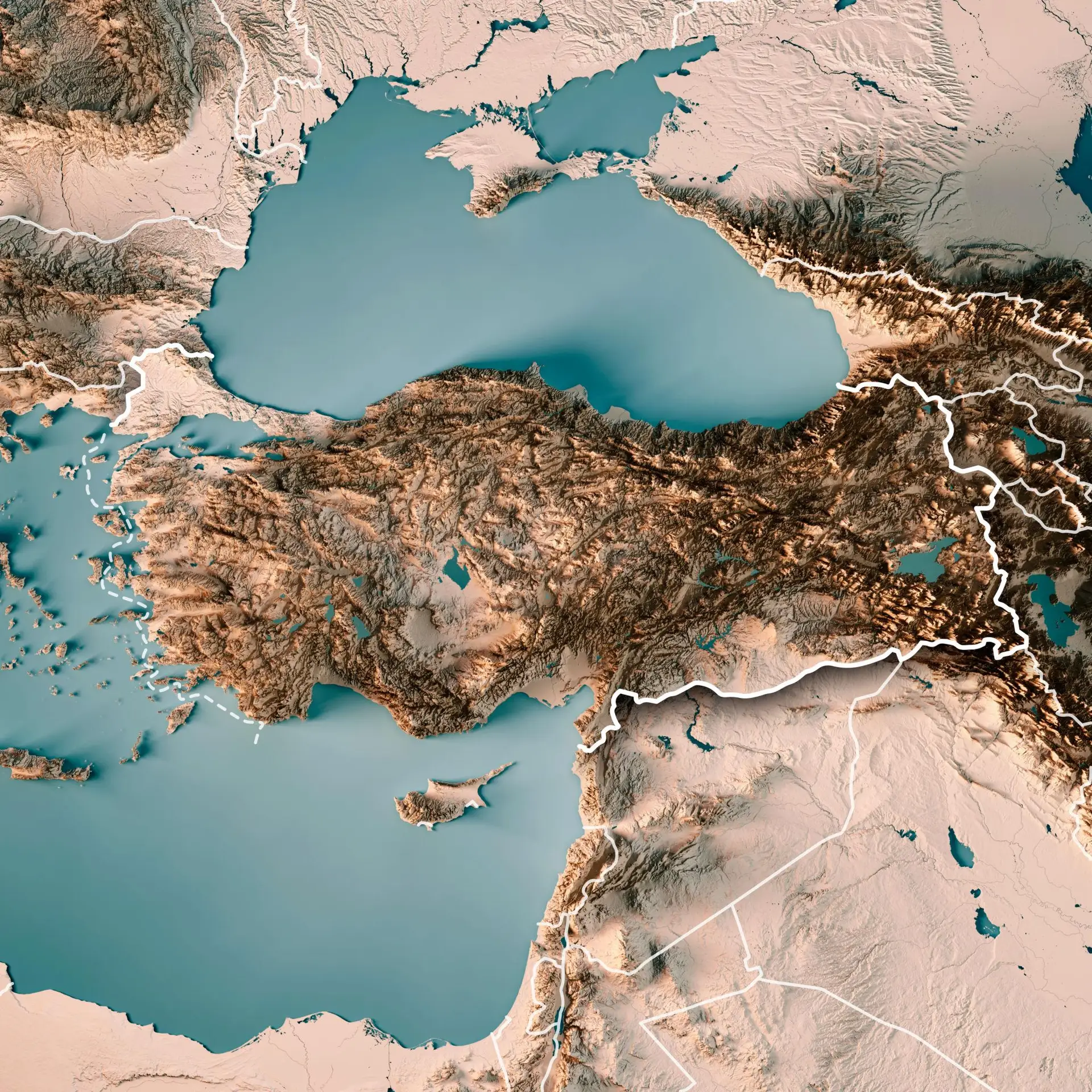
Over the years, scholars have proposed several possible origins for the Pazyryk carpet, linking it to Persian, Armenian, Central Asian, and the wider Eurasian steppe traditions. Each theory is based on different aspects of the carpet, from its decorative style to its weaving technique and the historical trade networks that connected these cultures.
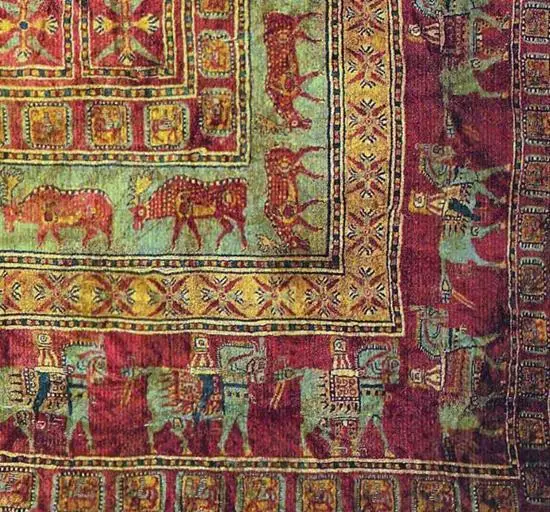
Rather than pointing to one civilization, the carpet reflects a world where artistic influence rarely respected geographical boundaries. Long before modern borders existed, merchants, nomadic tribes, and skilled weavers exchanged materials, techniques, and visual ideas across thousands of miles.
In many ways, the Pazyryk carpet is evidence that great craftsmanship has always been a shared human achievement.
The Real Legacy of the Pazyryk Carpet
Perhaps the greatest lesson of the Pazyryk carpet is that traditions are rarely born overnight.
The extraordinary quality of its weaving tells us something important: by the time this carpet was created, the art of carpet making was already highly sophisticated. A piece woven with approximately 360,000 symmetrical knots per square meter could only have been produced after generations of accumulated knowledge and refinement.
This challenges a common misconception about history. We often imagine ancient crafts as primitive, steadily improving over time. The Pazyryk carpet suggests the opposite. More than 2,300 years ago, weavers had already mastered techniques that remain difficult to replicate even today.
That perspective also changes how we understand Turkish rug history. Instead of beginning with a single empire or region, it becomes part of a much longer story—one shaped by migration, trade, cultural exchange, and the gradual passing of knowledge from one generation of artisans to the next.
For anyone who admires authentic Turkish rugs today, this is perhaps the most meaningful connection. Every hand-knotted rug represents more than beautiful craftsmanship; it carries forward a tradition that has survived because each generation chose to preserve the skills, techniques, and artistic values of the one before it. The Pazyryk carpet is not simply the oldest surviving carpet in the world—it is one of the earliest chapters in a story that is still being woven today.
How the Pazyryk Carpet Still Shapes Handmade Turkish Rugs Today
If the Pazyryk carpet teaches us anything, it’s that truly exceptional craftsmanship doesn’t become obsolete. While weaving styles have evolved over centuries, many of the principles that made the world’s oldest surviving carpet extraordinary are still found in the finest handmade Turkish rugs today.
The Turkish Knot: A Tradition That Endures
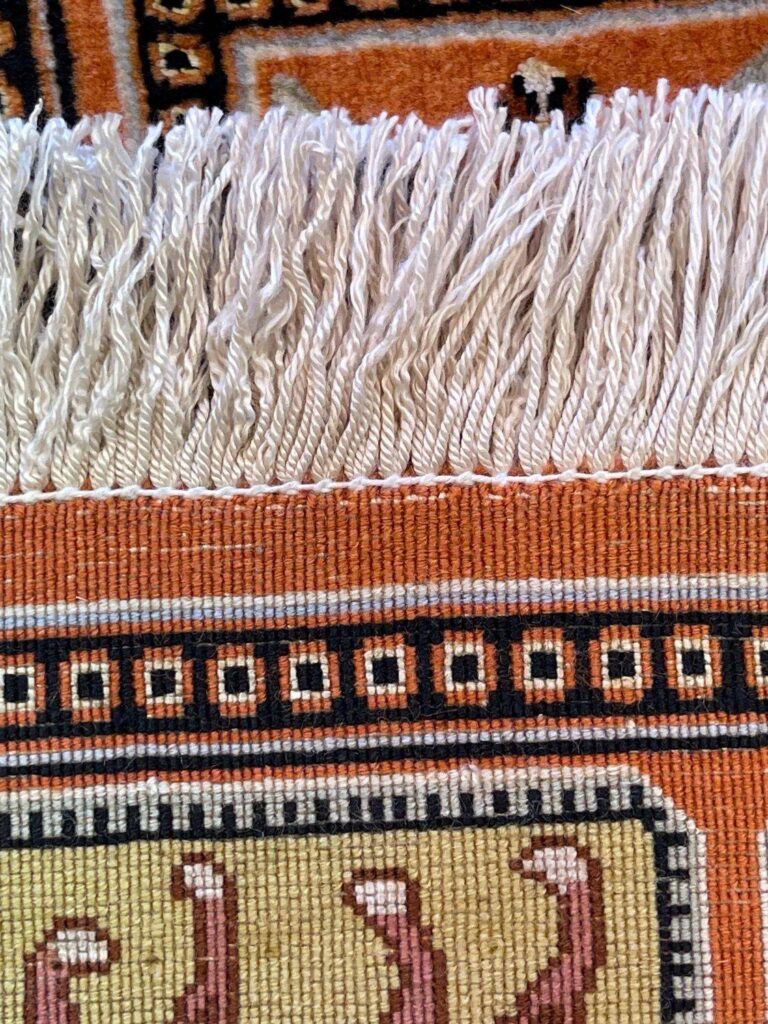
One of the strongest links between the Pazyryk carpet and modern Turkish rugs is the Turkish knot, also known as the Gördes knot.
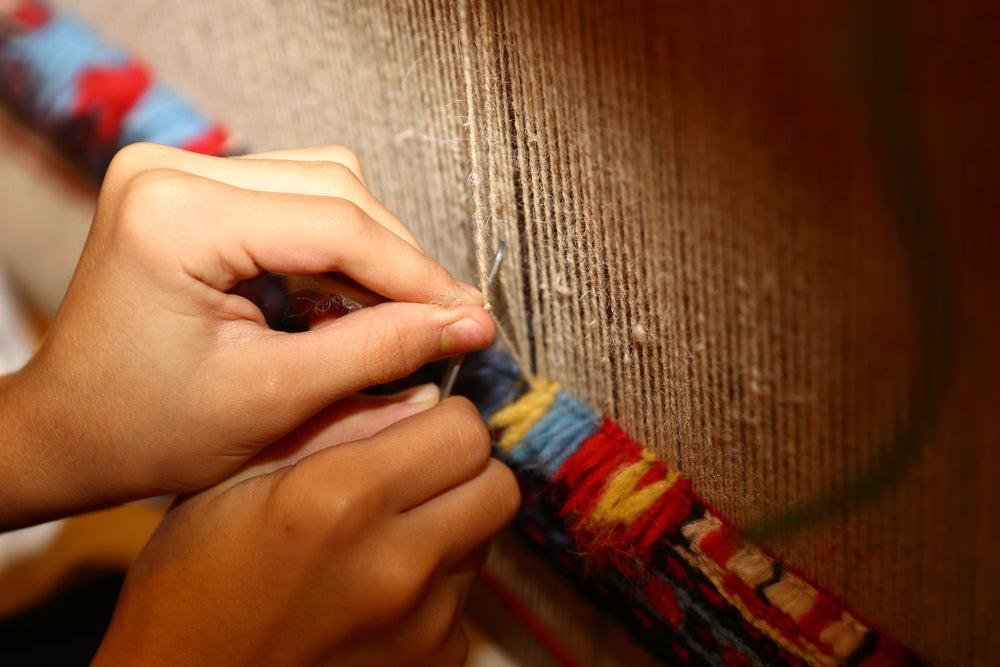
Unlike machine-made carpets, where fibers are tufted or glued into a backing, every knot in a hand-knotted rug is tied individually by hand. The symmetrical Turkish knot wraps evenly around two warp threads, creating a dense, durable structure that can withstand decades—sometimes centuries—of use.

For this reason, many collectors and interior designers continue to seek out authentic Turkish rugs when looking for pieces that offer both beauty and longevity. A well-made Turkish rug isn’t designed to be replaced every few years. It’s designed to become part of a family’s story.
Natural Materials Never Go Out of Style
Another lesson from the Pazyryk carpet is surprisingly relevant in today’s world of mass production: the quality of a rug begins with its materials.
The Pazyryk carpet was woven from wool and colored with natural dyes—materials chosen not because they were luxurious, but because they were practical, durable, and readily available. More than two thousand years later, many traditional Turkish carpets continue to rely on the same principles.
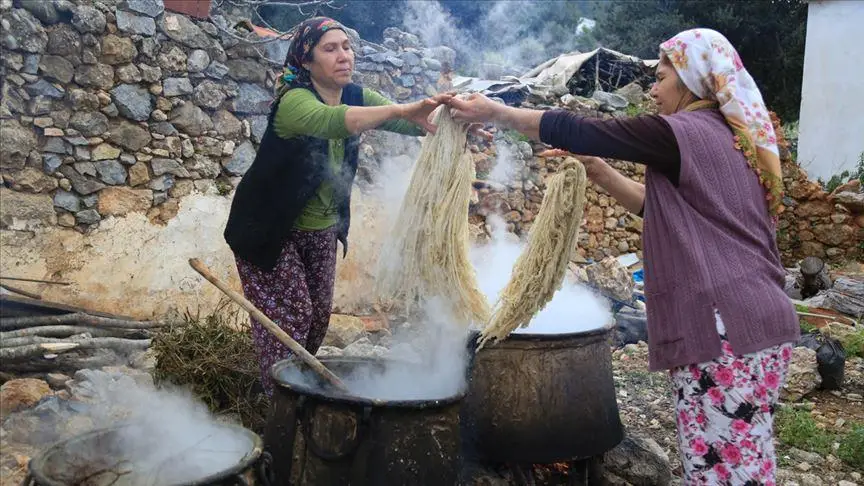
High-quality wool is naturally resilient, insulating, and capable of developing a rich patina over time. Natural dyes derived from plants, roots, insects, and minerals don’t simply fade; they mature gracefully, often becoming softer and more harmonious with age. This subtle evolution is one of the characteristics that makes vintage Turkish rugs so admired by collectors around the world.
In an era where so many household items are designed for short-term use, these traditional materials remind us that some things become more beautiful simply by being lived with.
Why Turkish Rug Motifs Continue to Fascinate
Beyond technique and materials, Turkish rug motifs offer another connection to the past.
Throughout Anatolia, weavers developed distinct patterns that reflected the traditions of their communities. Geometric forms, stylized flowers, ram’s horns, stars, and protective symbols appear across countless regional weaving traditions. While it’s tempting to assign a fixed meaning to every motif, historians caution that interpretations often varied between villages, families, and time periods.
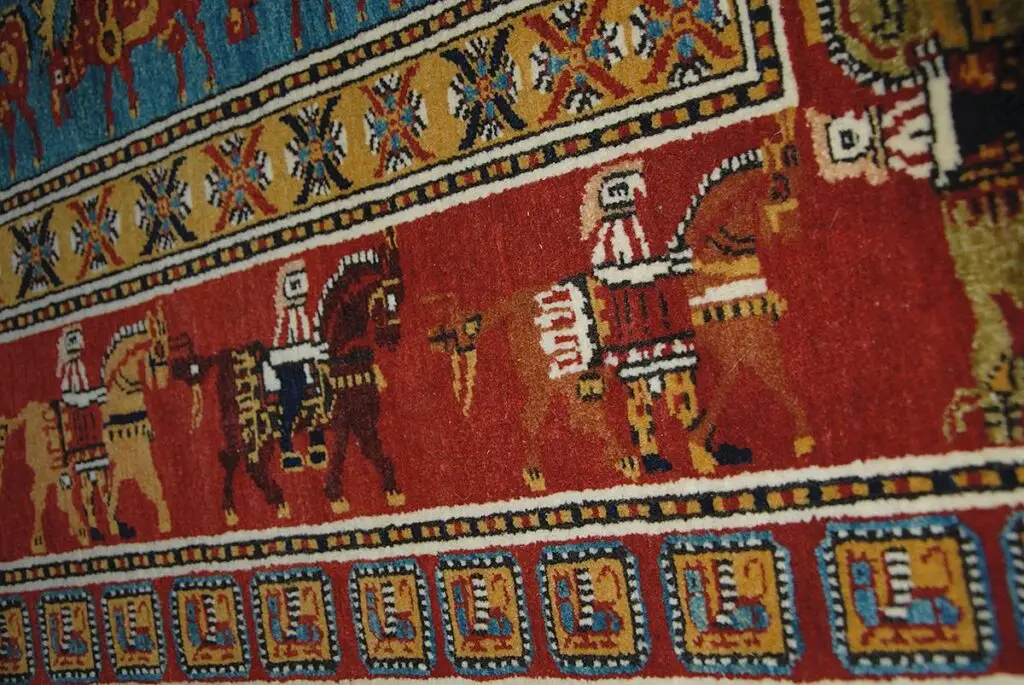
What makes these designs remarkable is not that every symbol can be translated, but that they continue to resonate centuries later. Like the carefully balanced borders and repeating patterns seen on the Pazyryk carpet, traditional Turkish carpet patterns combine rhythm, symmetry, and craftsmanship in a way that feels timeless.
Perhaps that’s why people continue searching for Turkish rugs today. They aren’t simply buying a floor covering—they’re investing in an object shaped by generations of skill, where every knot, every motif, and every choice of color reflects a tradition that has never truly gone out of style.