Why Buying a Turkish Carpet in Istanbul Is an Experience
Ask anyone who has visited Istanbul what surprised them most, and chances are they’ll mention the city’s markets. The scent of freshly ground coffee drifting through centuries-old streets, merchants greeting visitors in half a dozen languages, and shops where every object seems to carry a story. Yet among all these experiences, one stands apart: stepping inside a traditional Turkish rug store.
If you’ve never been, you might imagine rows of carpets hanging on the walls with price tags attached, much like any furniture showroom. The reality couldn’t be more different. In Istanbul, buying a handmade rug has never been a transaction alone. It is part cultural exchange, part craftsmanship lesson, and part conversation. Every reputable rug shop has its own personality, but the philosophy remains the same: before anyone recommends a rug, they first get to know the person who will live with it.
At Nakkaş Rug, in the heart of Sultanahmet, that philosophy begins the moment you cross the threshold. Whether you’ve arrived with a tour group, wandered in after visiting the Blue Mosque, or planned your visit months in advance, everyone is welcomed the same way. There is no expectation that you’ll buy anything. Instead, you’re invited to slow down—a rare luxury in one of the world’s busiest cities.
That slower pace is intentional. Handmade Turkish rugs aren’t impulse purchases. Some take months to weave, others more than a year. Appreciating them starts long before the first carpet is ever rolled out across the floor.

Before You See the Turkish Rugs, You Meet the People Behind Them
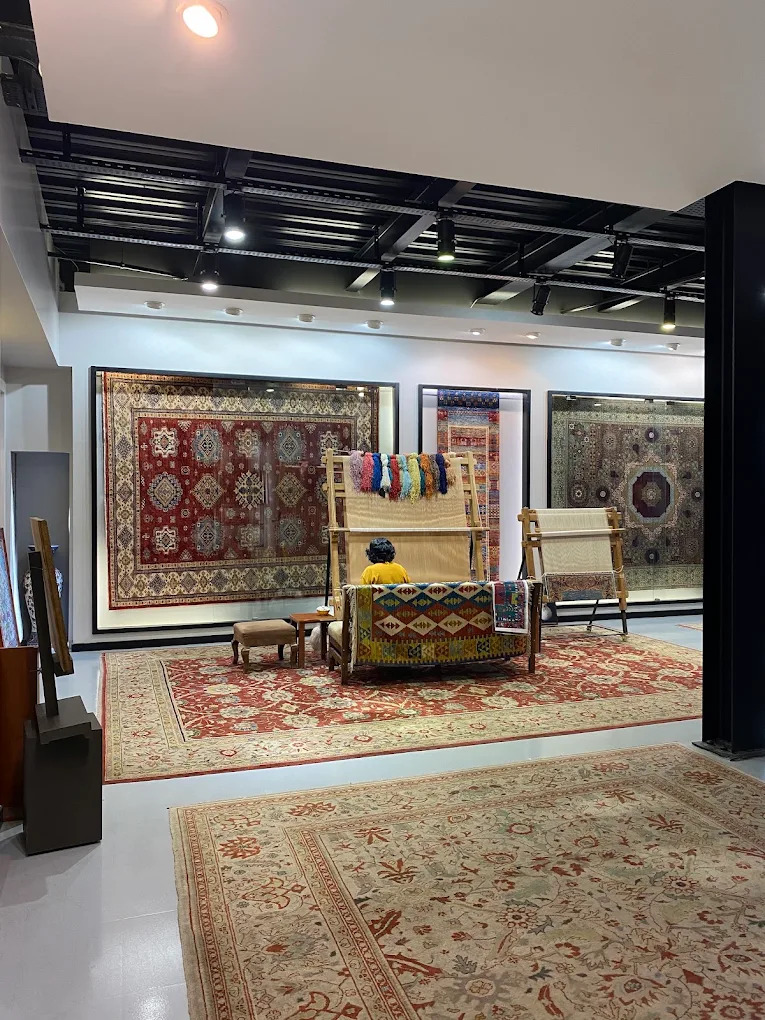
Most visitors expect to see beautiful carpets as soon as they enter. Instead, the first thing they encounter at Nakkaş is something much more memorable: a loom in motion.
Standing beside it is one of the store’s most experienced weavers, a Turkish woman who has spent years mastering a craft passed down through generations. Rather than simply explaining how a rug is made, she demonstrates every movement by hand. Thread by thread, knot by knot, an intricate pattern begins to emerge, revealing just how much patience lies behind every finished piece.
For many visitors, this becomes the highlight of the entire experience.
Watching a weaver tie hundreds of knots is fascinating on its own, but guests are also invited to try it themselves. With her guidance, you can learn the famous Turkish double knot, also known as the Gördes knot, one of the defining characteristics of many authentic Turkish rugs. What looks effortless in the hands of an expert quickly proves otherwise. Even tying a single neat knot requires concentration, precision, and practice.
It is a simple activity, yet it changes the way people see handmade rugs. Suddenly, the value of a carpet is no longer measured only by its colours or size, but by the countless hours hidden within every square centimetre. Children are often eager to give it a try, while adults instinctively reach for their cameras, capturing a moment that feels less like shopping and more like participating in a centuries-old tradition.
By the time visitors leave the loom, they already understand something important: every rug upstairs represents thousands—sometimes millions—of these carefully tied knots.
Upstairs, the Experience Becomes Personal
Only after this introduction does the visit move upstairs to the showroom.
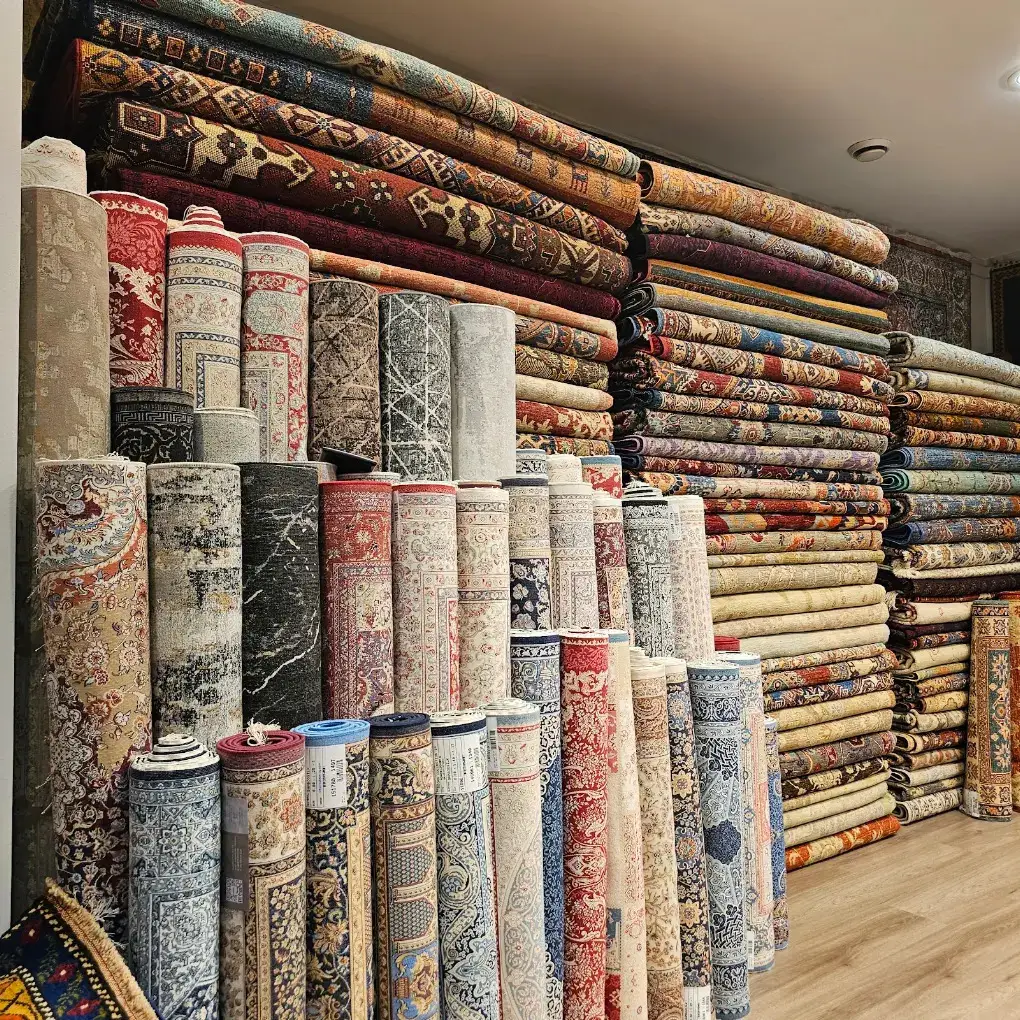
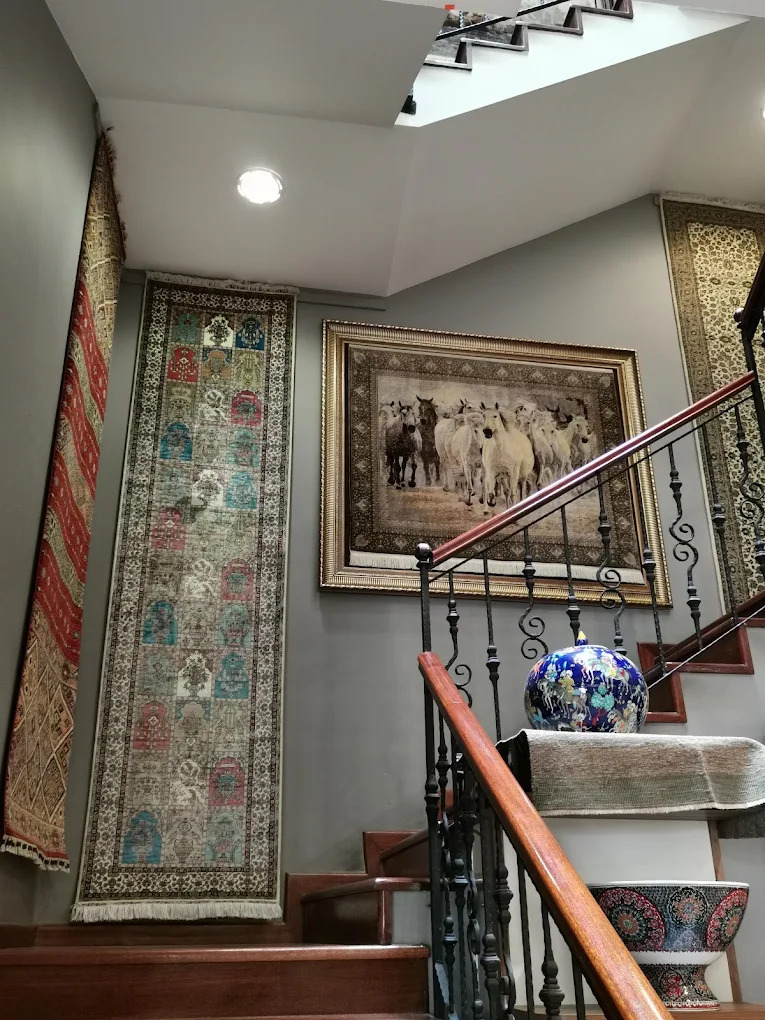
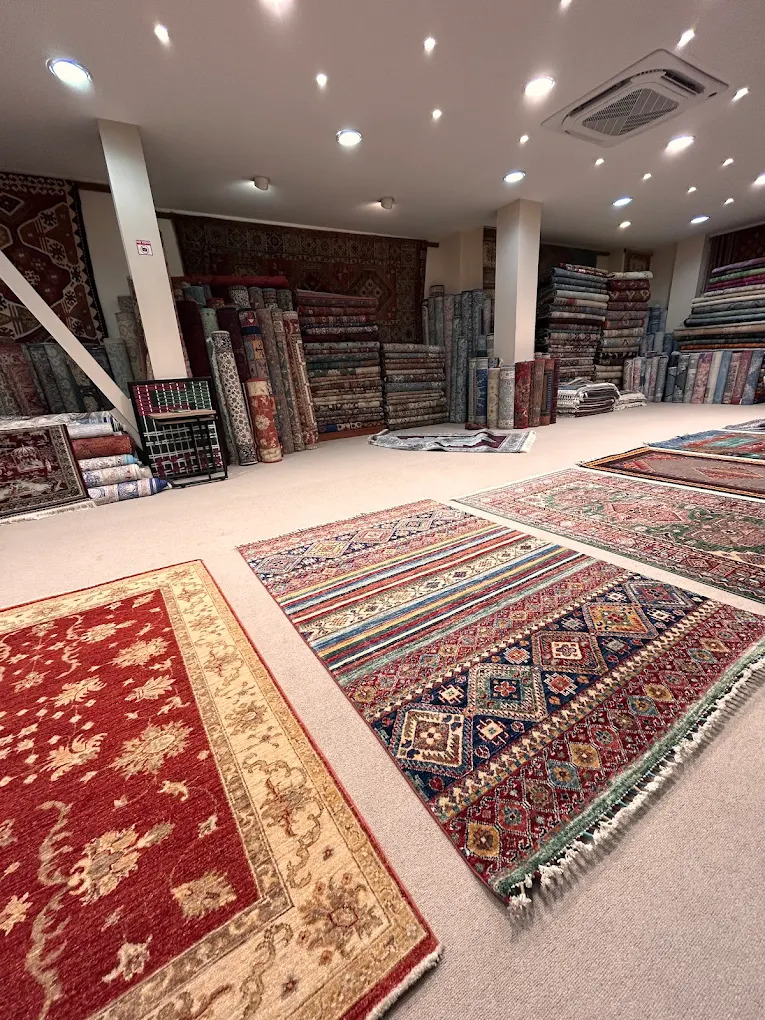
Unlike many retail spaces where customers browse freely through endless aisles, the showroom at Nakkaş is prepared for each guest. The atmosphere is quiet and unhurried. Stacks of handmade silk and wool rugs are carefully arranged around the room, waiting to be opened one by one. There are no flashing sale signs or pressure to make a quick decision. Instead, you’re invited to settle in with a cup of Turkish tea, freshly brewed coffee, or even a glass of wine if you prefer.
This is where one of the biggest misconceptions about rug shopping in Istanbul disappears.
Many first-time visitors expect a presentation focused on selling. In reality, the first part of the conversation rarely has anything to do with the rugs themselves.
Instead, your rug expert starts by asking questions.
Not, “Which one would you like?”
But questions that help build a picture of your home and your personal taste.
Where will the rug be placed?
Are you looking for something large enough to define an entire living room, or a smaller accent piece? Do you gravitate toward contemporary interiors, or do you appreciate traditional Anatolian patterns? Are soft earth tones more your style, or do vibrant reds and deep blues catch your eye? Is this your first handmade rug, or have you been collecting for years?
These conversations aren’t scripted. They’re the foundation for everything that follows.
Every handmade rug tells a different story, and no two visitors are looking for exactly the same thing. A minimalist apartment in New York calls for something entirely different than a historic townhouse in London or a seaside villa overlooking the Mediterranean. Rather than asking customers to adapt to the rugs, the goal is to find rugs that naturally belong in their homes.
Only then does the real presentation begin.
The Art of Finding Your Turkish Rug
If you’ve ever watched someone walk past the open door of a Turkish rug shop, you’ve probably seen dozens of carpets being unfurled in quick succession. To an outsider, it can look theatrical. Why lay out so many rugs when the customer only plans to buy one?
The answer is surprisingly simple: a handmade rug can’t truly be appreciated while it’s folded.
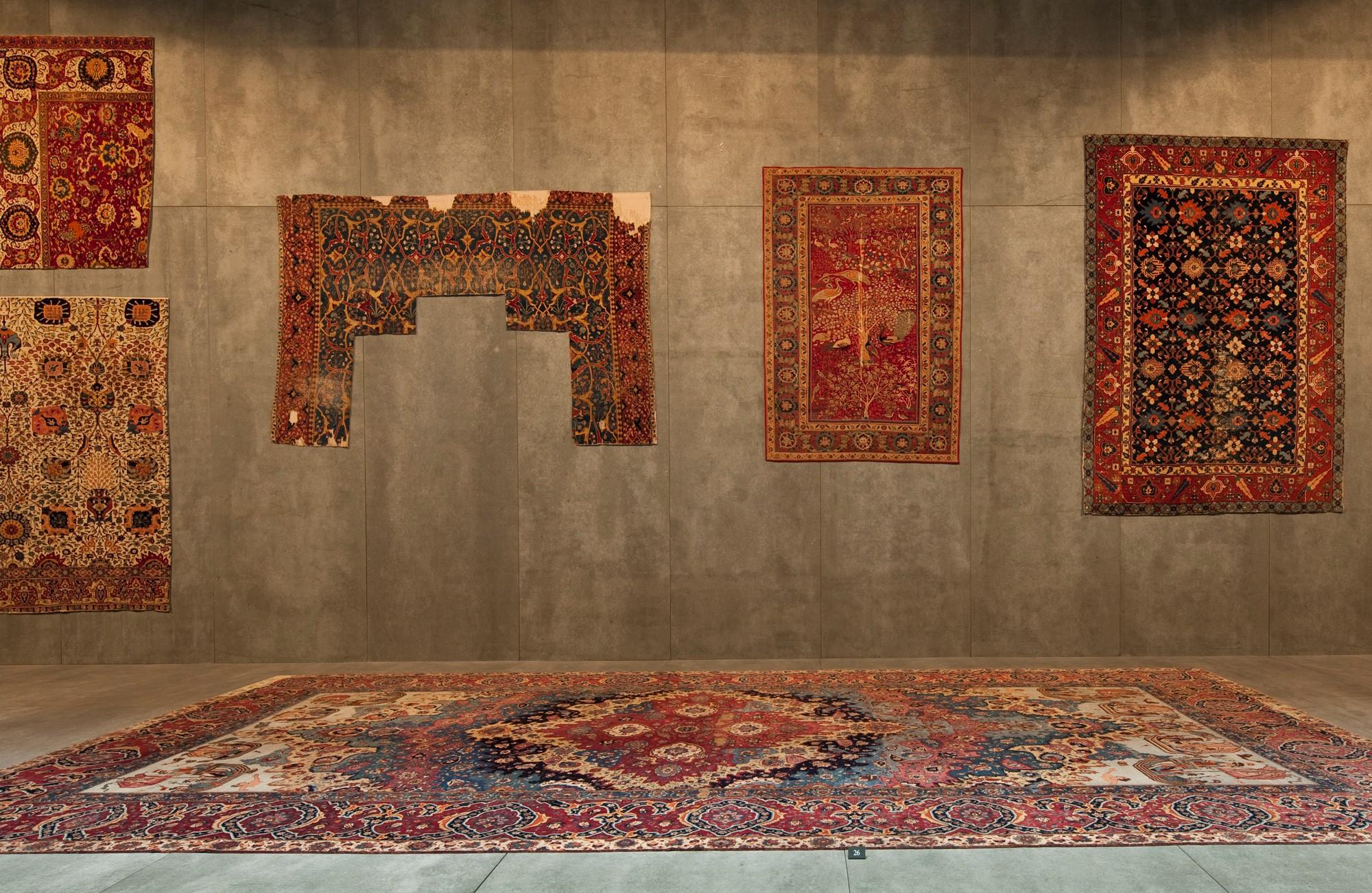
The way silk catches the light, the subtle variations created by natural dyes, the texture of hand-spun wool, the balance of a border against a central medallion—these are details that only reveal themselves when a rug is opened completely. A pattern that seems bold from a distance may suddenly feel delicate up close. Colors shift with the daylight. Two rugs woven in similar shades can evoke entirely different moods once they’re spread across the floor.
That’s why the presentation unfolds one rug at a time.
At Nakkaş, your rug expert carefully selects pieces based on the conversation you’ve already had. There is no predetermined order or fixed presentation. Every visit is different because every customer is different.
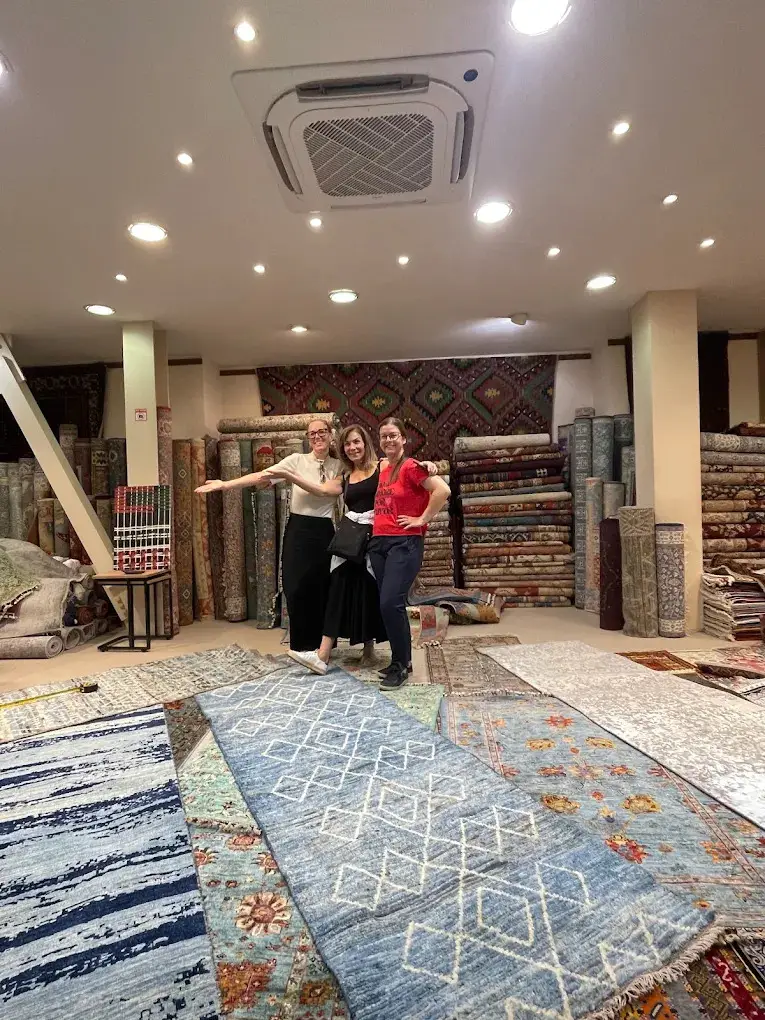
A couple furnishing their first apartment may be shown contemporary Anatolian designs with softer palettes that complement modern interiors. Someone restoring a historic home might find themselves comparing finely detailed pieces inspired by classical Ottoman workshops. A collector interested in craftsmanship may spend just as much time discussing weaving techniques, natural dyes, and regional traditions as looking at the designs themselves.
Sometimes the perfect rug appears within minutes. More often, it arrives unexpectedly.
A visitor convinced they want a colourful geometric kilim may suddenly fall in love with a softly faded vintage wool carpet. Someone searching for a statement piece might discover that a quieter design feels more at home in their space. It happens more often than people imagine because choosing a rug is rarely about ticking boxes on a checklist. It is about discovering something that feels right the moment you see it.
The process isn’t rushed. Rugs are compared side by side, layered over one another, viewed from different angles, and revisited after a cup of tea. Questions continue throughout the presentation, not because anyone is trying to persuade you, but because every answer helps narrow the search.
The goal isn’t to show the largest possible collection.
The goal is to find the one rug you’ll still love decades from now.
Bringing a Piece of Istanbul Home
One of the biggest concerns visitors have before buying a handmade Turkish rug is also one of the easiest to answer.
“How am I supposed to get it home?”
Many imagine carrying a large rolled carpet through airports, onto cruise ships, or somehow squeezing it into an already full suitcase. In reality, buying a rug in Istanbul has become remarkably straightforward thanks to international shipping.
Once you’ve chosen your rug, the Nakkaş team takes care of the practical details. Larger carpets are professionally packed and shipped worldwide, allowing them to arrive safely at your home without becoming another travel concern. Smaller rugs, kilims, and runners are often compact enough to accompany travelers on flights or cruises, making them an easy addition to the journey home.
For many visitors, the purchase marks the end of a memorable afternoon. For Nakkaş, it is often the beginning of a much longer relationship.
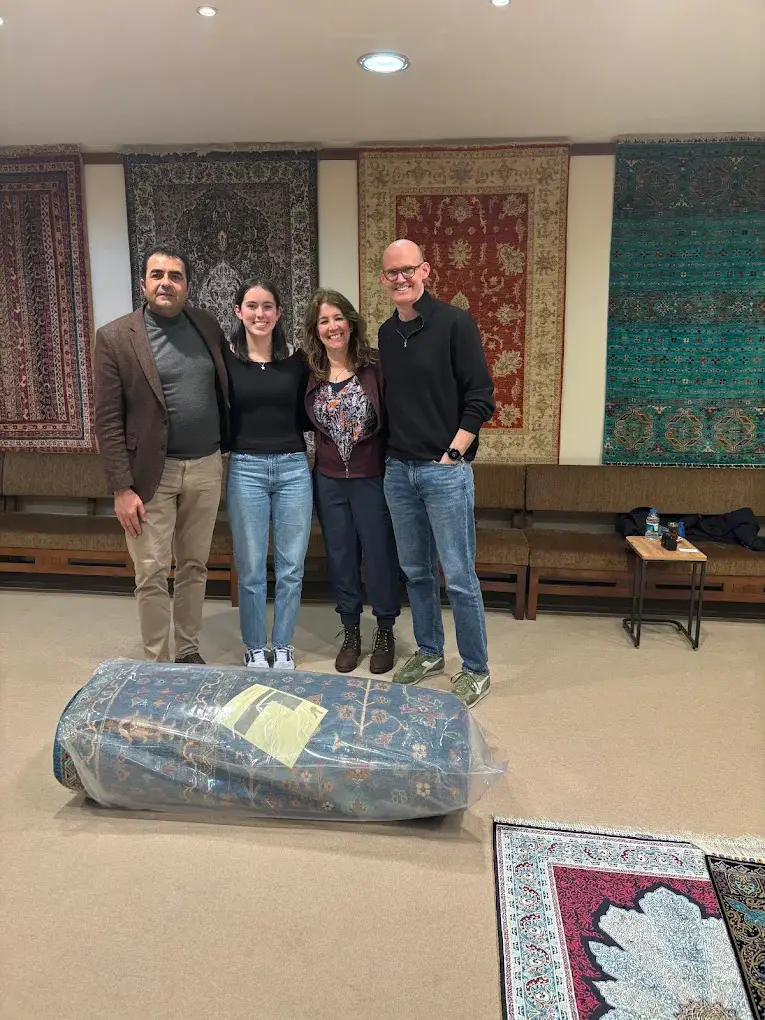
Months later, customers send photographs of their rugs in newly decorated homes. They ask how to care for natural wool, how to rotate a carpet for even wear, or simply share how a piece they discovered in Istanbul has become the centre of a room thousands of kilometres away. Others return years later on another visit to the city, not just to browse, but to say hello, enjoy another cup of Turkish tea, and perhaps find a second rug for a different corner of their home.
That sense of continuity reflects something deeply rooted in Turkish hospitality. A handmade rug is meant to last for generations, and the relationship with the people who helped you choose it often lasts far longer than the afternoon you spent in the showroom.